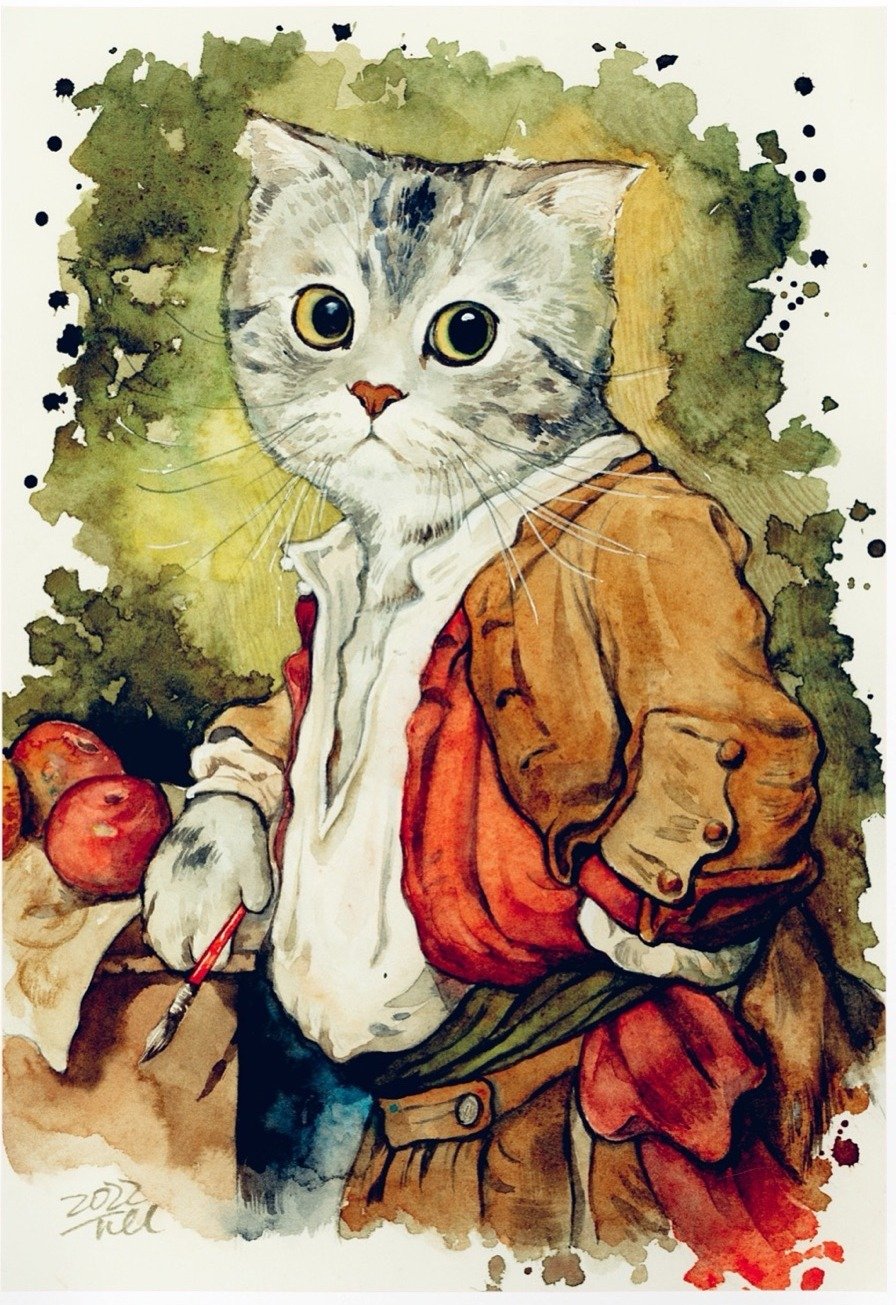
AI's greatest danger may be making creative work look more and more alike, rather than replacing creators.
Images grow more polished, prose more fluent, and videos more complete. Yet the more of these works we see, the harder it can be to recognize a particular person behind them.
Over the past two years, some people have already begun to tire of the so-called "AI face."
These faces are beautiful, of course: smooth skin, perfectly proportioned features, dreamlike lighting, and barely an obvious flaw. But after looking at dozens of them, you may have a strange feeling:
They have everything except "this person."
On July 17, 2026, a speech about artificial intelligence and the diversity of civilizations at the opening of the World Artificial Intelligence Conference and High-Level Meeting on Global AI Governance made this point:
The development and use of artificial intelligence should not erode or harm the diversity of the world's civilizations or the cultural distinctiveness of individual countries.
The remark concerned civilizations and cultures, but it also made me think about something more immediate:
If AI should not damage cultural distinctiveness, shouldn't the same apply to individual creative work? Shouldn't it also avoid turning our paintings, articles, and videos into variations on the same flavor?
01 AI did not invent imitation, but it has made imitation unprecedentedly fast
Many people who paint develop their own habits of expression through years of making work.
They might introduce an unusual patch of color, leave a space that someone else would fill, or favor a particular composition, brushstroke, or expression on a face.
Some of these choices are never consciously designed. They grow slowly out of repeated observation, experimentation, and decisions about what to keep and what to leave out.
When those details recur, people begin to recognize them:
This is your painting.
But once a style finds a market and people prove willing to embrace it, imitation follows.
That did not begin with AI.
In the past, an artist wanting to learn another style might spend a long time observing, copying, and practicing. Now, with some generative tools, a reference image and a few rounds of revised instructions may produce something that looks quite close.
AI did not create the urge to follow a trend, but it has greatly reduced the time and technical skill needed to copy one.
Business has always liked success it can reproduce. AI happens to make "reproducing" things cheaper and faster.
So a once-distinctive color palette starts appearing everywhere. A fresh composition quickly becomes a template. One face becomes popular, and countless similar faces are generated in its wake.
Those styles have not suddenly become worse. But when we see them too often, it becomes harder to feel the freshness of that first encounter.
02 If a style is only a set of visual signatures, it will eventually be copied
This has made me realize something else:
A personal style is more than a fixed set of colors, brushstrokes, and compositions.
Those are only the traces a style leaves behind.
If we understand style as "which color goes here" or "how much blank space goes there," it can certainly be taken apart, summarized, and ultimately turned into a set of parameters to imitate.
But what really makes a style personal is the judgment behind those results:
Why did that particular moment catch your attention?
Why did you leave empty the place everyone else thought should be filled?
Why, when everyone is pursuing smoothness and completeness, do you want to keep one hesitant line?
Those choices come from a person's past experiences, way of observing the world, and feelings in the moment of creating.
AI can learn from work a creator has already made, but it cannot know in advance what will make that person change in the next piece.
It can copy who you were yesterday, but it cannot decide where you want to go tomorrow.
03 AI can amplify both sameness and difference
We often describe AI-generated content as a kind of "average."
Strictly speaking, this is not a mathematical average. More precisely, when someone has not supplied enough clear experience, judgment, and direction, AI is more likely to offer familiar, safe answers that are broadly acceptable.
Those answers usually are not bad.
The problem is that they rarely feel as though they belong to anyone in particular.
If we look at the first attractive image or fluent passage AI produces and think, "This will do," then what AI amplifies is a familiar, widely shared way of expressing things.
But a person with clear observations and judgments will keep asking:
Is this really what I want to express?
Is this part too neatly finished?
This color is beautiful, but why does it have to be handled this way?
Can I keep something that is a little wrong, a little rough, or even unlikely to please everyone?
At that point, AI becomes more than an answer generator. It becomes a place to experiment.
It can quickly show more possibilities, while the creator chooses, rejects, revises, and gradually finds a path of their own.
Whether AI makes creative work more alike or makes individual character more distinct does not depend entirely on the tool.
It depends more on whether the person using it is accepting passively or judging actively.
Without your own judgment, AI amplifies the average. With your own way of seeing, it can amplify you.
04 What creators need is to grow faster, not simply produce faster
AI does bring a sense of urgency to creative work.
A style that wins a market today may have countless close imitations tomorrow. As similar products multiply, consumers naturally compare price, features, distribution, and trust.
That does not mean consumers disrespect original work. When differences become hard to distinguish, people have to look for other ways to decide.
Nor can a creator expect the market to keep paying for the same expression forever simply because "I did it first."
But that urgency should not push us into another trap:
Racing against the clock to generate more content.
What is worth pursuing is not a few dozen more images or articles than everyone else, but the next step in our own development, while using AI to expand what we can do.
Good creators stay ahead not because they retain exclusive ownership of a style forever, but because, by the time others have learned their answer, they have begun asking the next question.
Seen this way, AI is both pressure and motivation. It makes successful work faster to copy, while pushing creators beyond familiar forms of expression toward new observations, experiences, and judgments.
05 In the age of AI, we need a particular person more than ever
The idea that AI should not harm cultural distinctiveness is more than a grand question about civilizations.
Every ordinary person's expression is a small but real part of cultural diversity.
A color particular to one place, a piece of life only you remember, an accent that is not quite standard, an experience that cannot be reduced to a template: together, these form the differences we should not lose.
The tools are available to everyone, and the technical barriers will continue to fall.
What is truly scarce in the future may no longer be whether something can be made, but whether a particular person is present in it.
So before asking AI to generate something, perhaps we can ask ourselves three questions:
What in this work could only come from my own experience?
Faced with the most familiar, safest answer, what do I want to reject?
If I had to preserve one imperfection, which would I keep?
AI will not automatically protect our individuality.
It will amplify what we give it.
If we give it vague requests and ready-made standards, it will amplify resemblance. If we give it personal experience, aesthetic judgment, and the courage to keep questioning ourselves, it can amplify difference too.
AI can quickly copy who you were yesterday, but it cannot decide who you want to become tomorrow.
What is truly scarce in the future may not be a style that has never been imitated.
It may be a person who has never stopped growing.
Note: This article discusses collaboration between AI and individual creators. It does not advocate using other people's work without authorization or encourage imitating a particular creator's style.
What did this bring to mind?
Share a memory, a different view, or a thought you would like to continue. No account is needed. Comments appear after review; readers’ words remain in their original language.
Conversation
Loading comments…