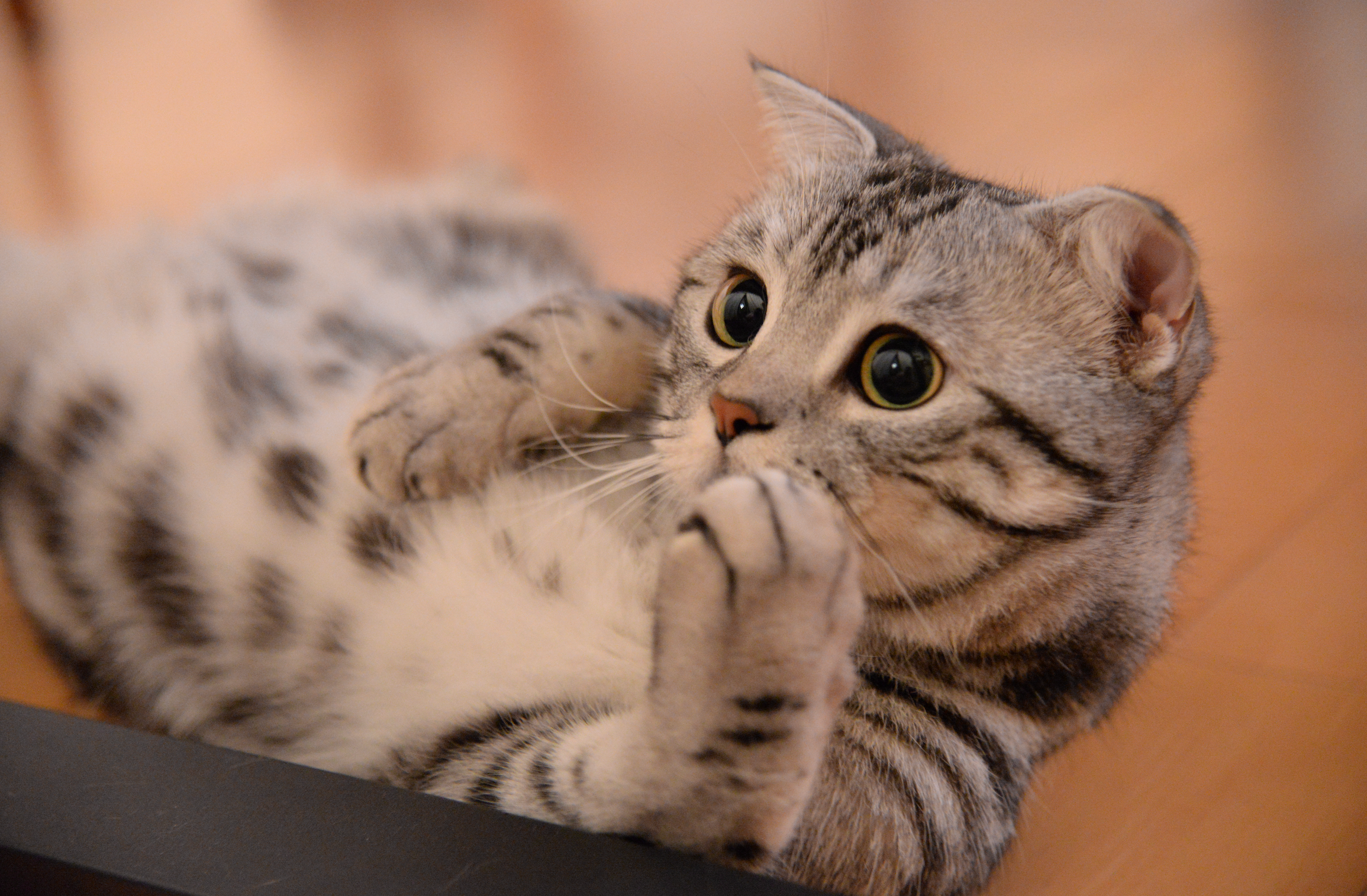
When Sanmu sees the camera, his gaze wanders.
He isn't very likely to stare obediently at you and wait for you to finish the photo. Getting him to look over takes a little ingenuity. Put some food he likes above the lens, for instance, and eyes that didn't seem to know where to look suddenly have a clear direction. He stares, and I quickly press the shutter.
In the photo, he looks as though he's gazing intently at me. What actually has his attention may be the little bit of food above the lens.
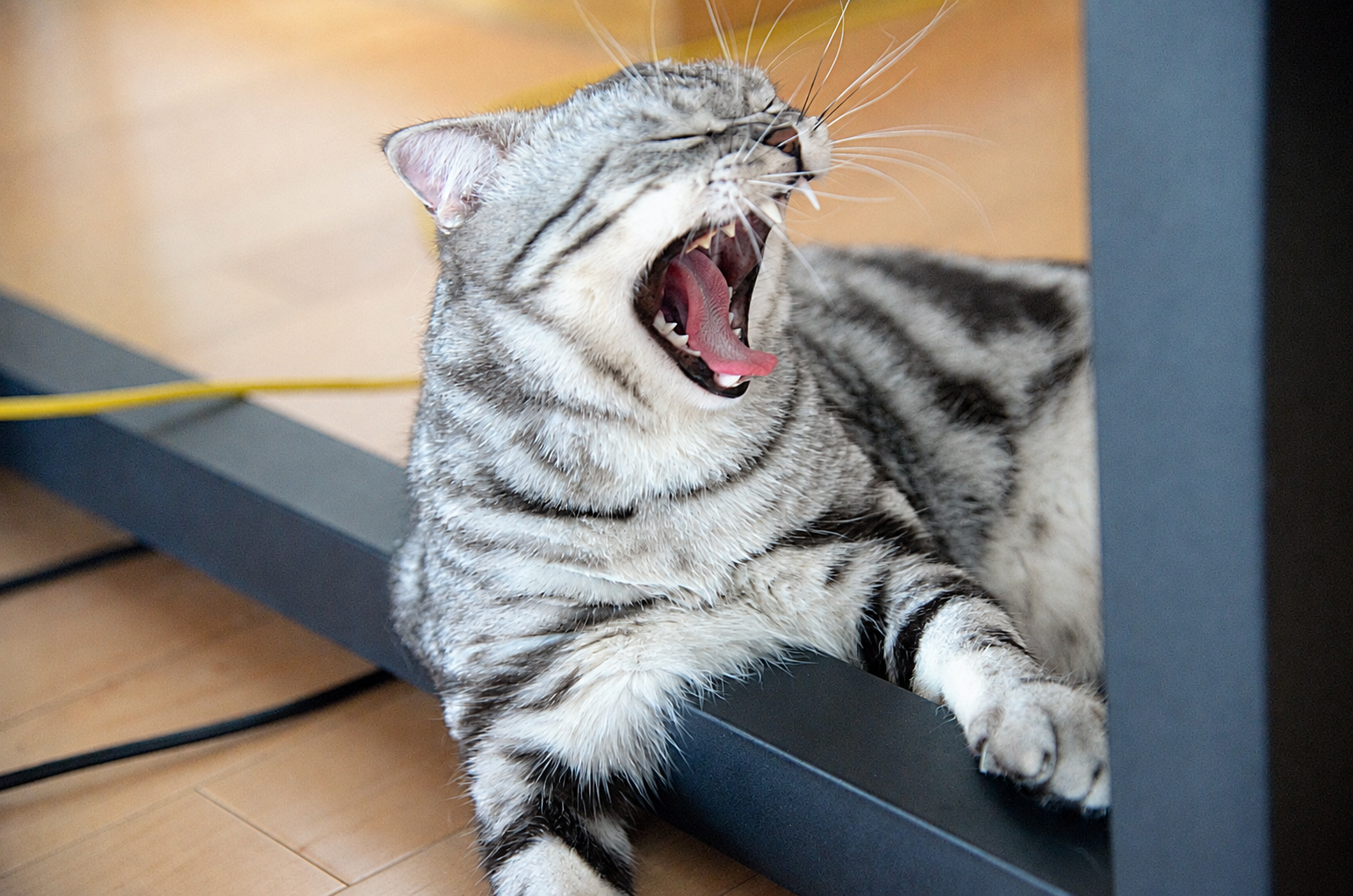
When Sanmu was little, taking pictures required teamwork with my parents. Someone would attract his attention while I took the photo. As I took more, I gradually learned his patterns, and photographing him became relatively easy. What would make him look over, which way his head would turn after a certain movement, where his gaze would land: I could anticipate a little of it.
I learned those patterns by photographing the same cat again and again.
If you want a clear picture of your own cat, try this small trick: hold a favorite toy above the lens and move it gently. Get the camera ready first, then attract the cat's attention. When the head turns and the gaze settles, press the shutter. It's easier with someone helping: one person looks after the cat, the other the picture.
Where you place the object makes a difference. Too far to one side, and the cat looks away. If you want a straight look into the camera, keep it as close above the lens as you can. After several tries, you'll start to recognize your own cat's responses too. That turn of the head looks sudden, but after enough photographs, you have a rough idea of where to wait for it.
Being practiced brings its own problem, though.
As I kept taking pictures, I noticed Sanmu's expressions all looked rather similar. The reason was simple: I kept using similar movements to attract him, so of course he gave me similar expressions. Eyes fixed, head turned toward me: clear and attractive, yes. But after many photos, I wanted to keep some other looks too.
For something more natural, you have to wait.
At that point, I'd rather set the shutter speed and exposure first, then hold the camera and wait for the moment. Many of Sanmu's good photographs really did come from waiting like this. A photo keeps only the instant when the shutter was pressed. It doesn't show how long came before it.
Make him look at the camera, and you capture how he looks when something has attracted him. Leave him alone for a while, and you get a chance to see what he'll do next on his own. As for when an expression worth photographing appears, that isn't so willing to follow human arrangements.
Here are a few settings you can try directly when photographing cats. They draw on Nikon's cat-photography tutorial and pet-photography advice published by Canon. They are starting points, not answers that apply to every photo.
First, make sure the shutter can keep up. When a cat is fairly quiet with only slight movement, try starting at 1/250 second. For turning the head or batting a toy, try 1/500 second. For running and jumping, start at 1/1000 second or faster. Enlarge the photo to check the eyes and fur for motion blur, then adjust for the movement.
Focus on the eyes. When the face is at an angle, prioritize the eye closest to the lens. If the cat keeps moving, use continuous autofocus. If the camera supports animal eye detection, you can turn that on too. Once focus can keep up, add short bursts to give yourself a little more choice afterward.
When light is low, don't focus only on keeping ISO down. Start in a bright place with soft light near a window, and use Auto ISO. To blur the background, you can begin at f/2.8. If you want more of the face's details to be sharp, try f/4 or f/5.6 and check the result. This aperture range is a combined suggestion; it also depends on the lens, distance, and angle of the cat's face. If the image is too dark, add light or adjust the settings rather than forcing the numbers to fit.
These settings are there so that, when he finally looks over, you can keep that instant.
I paint commissioned watercolor pet portraits, and I have one very practical requirement for reference photographs: they need to be clear at least. I need to see the expression, without the fur becoming one blur. An owner's favorite photo may carry special memories, but when I come to the paper, I still need to distinguish the eyes, markings, and facial details. A clear reference gives me something to work from.
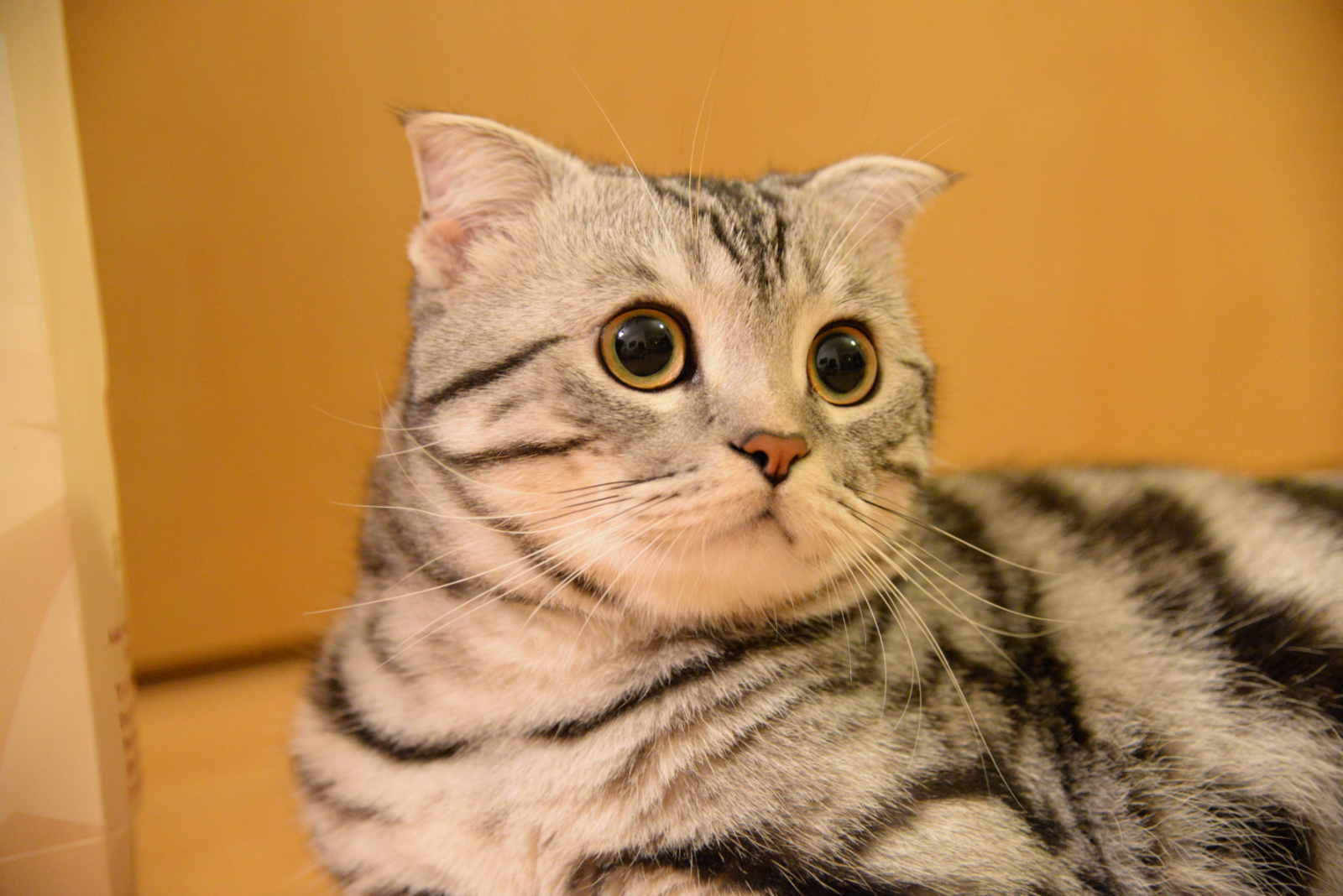
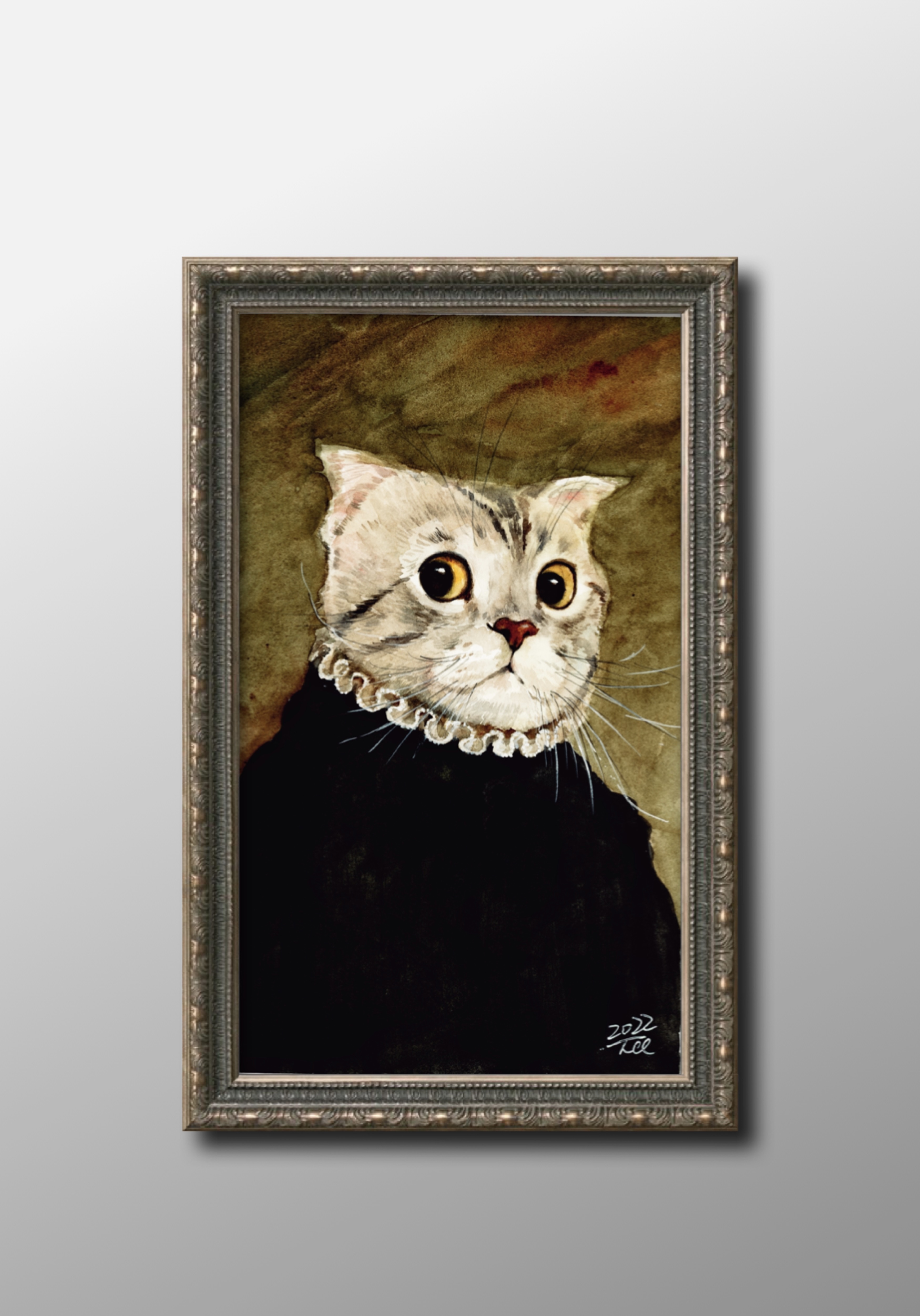
So if the aim is to take a pet photograph suitable for painting from, using something to attract attention really does help. You don't have to chase a rare moment from the start. First, take a clear picture of the cat in front of you.
As I continue photographing Sanmu myself, though, I want to wait a little longer. After looking at the same cat for so many years, I already know how to get him to look over fairly easily. I still want to photograph an expression that's a little different.
The camera is ready, and his gaze wanders off again. Then I'll wait a little more. After all, there are ways to get a clear front view. The next natural expression still depends on Sanmu.
What did this bring to mind?
Share a memory, a different view, or a thought you would like to continue. No account is needed. Comments appear after review; readers’ words remain in their original language.
Conversation
Loading comments…