Originally recorded 2026-10-14; added to my personal website on November 11, 2026.
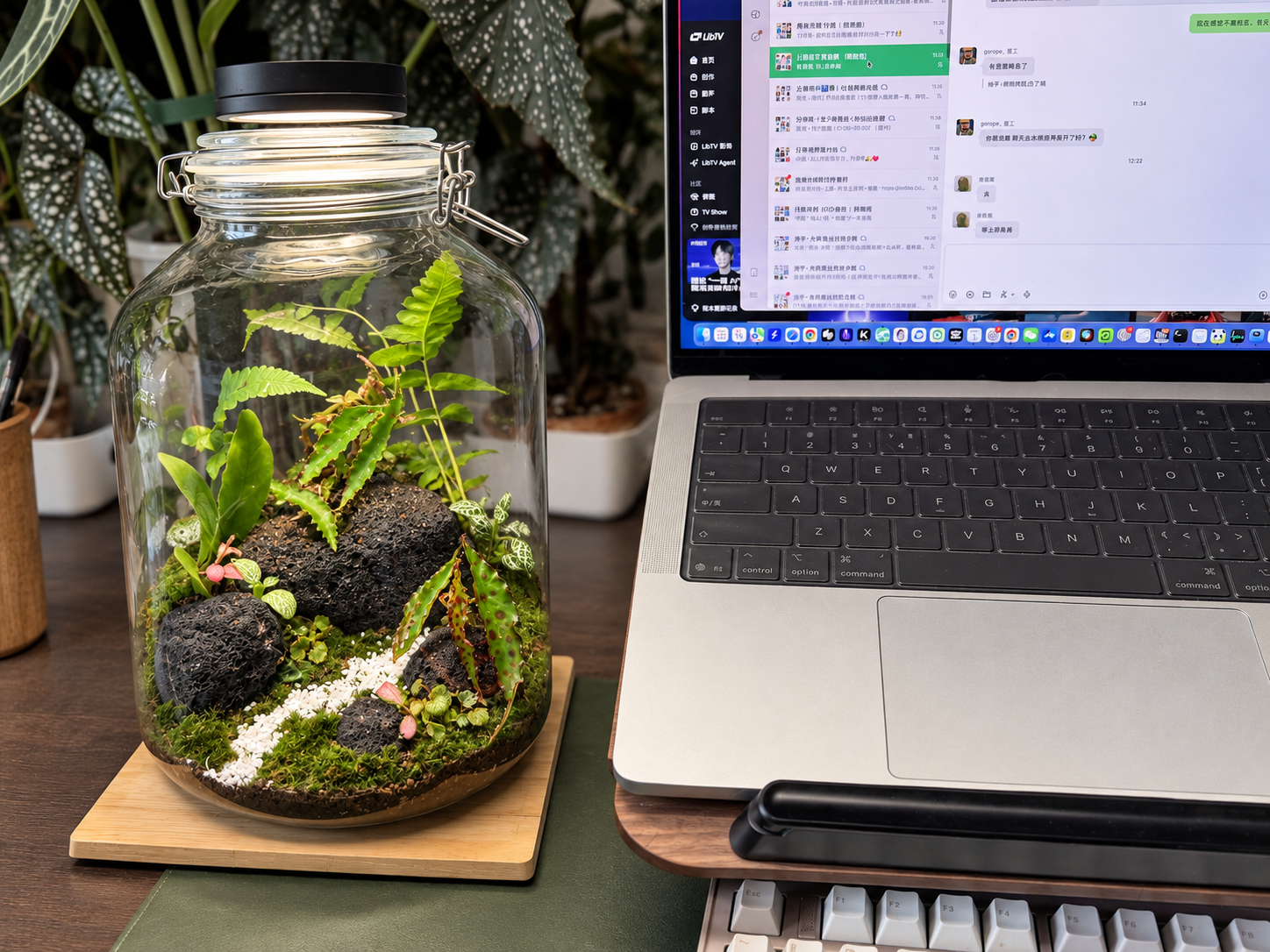
I felt the urge to make another terrarium. For me it has something in common with painting: you start with an empty space and build something by placing soil, stones and plants. I’ve spent so much time working with AI lately that the plants at home have had less attention. Some in the older tanks survived, but were not in great shape. Someone still needs to notice the light and the damp. I had an empty jar and materials to hand, and wanted to bring them together again.
Trying a different container
I usually work in square, clear-glass tanks. This was my first attempt in a lidded jar. Two jars cost 24 yuan, so twelve apiece; that doesn’t include soil, rocks or plants. I had to consider how much would fit through the opening and how I would look after it later.
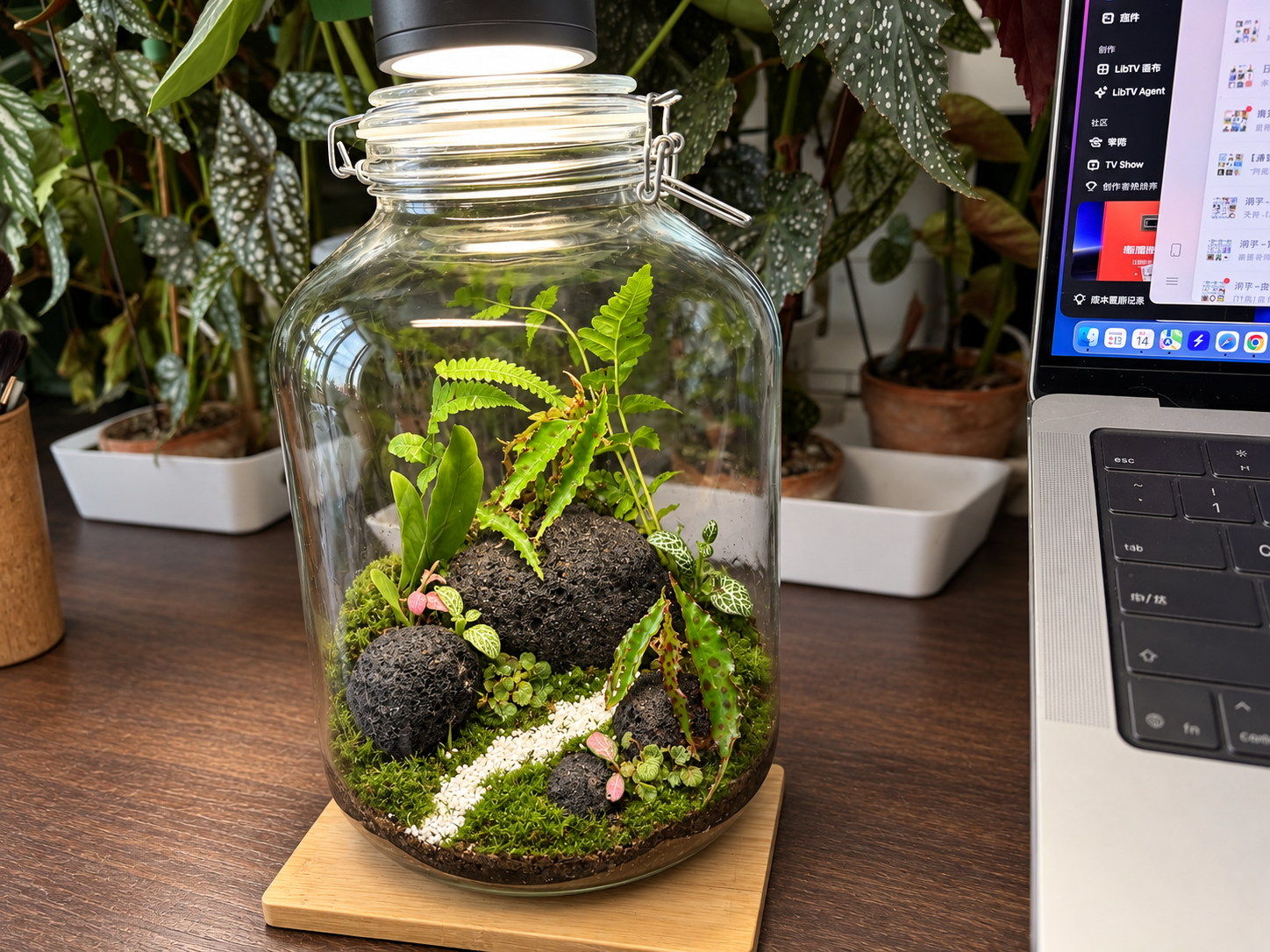
I laid down fine pumice and lava particles, then granular soil mixed with a little fine akadama. Handfuls of soil didn’t land where I wanted. A funnel or tube might help next time. I placed large, medium and small black lava rocks before planting. The nerve plant came from trimmings in another tank; a small saxifrage went near a crevice, with begonia cuttings and a few ferns elsewhere. Patches of short moss and a little white gravel left some contrast with the rock. Some ferns only revealed how large they were once inside. Altogether it took about half an hour to an hour.
Easy to keep doesn’t mean easy to lay down
I’d had reasonable luck with this short velvety moss before, and Yushui also found it relatively easy to grow. My white cushion moss hadn’t fared as well. Yet the cushion moss was thick enough to tear off and place exactly where I wanted it. This softer, finer moss sometimes lifted again after I put it down. I used it around stones and in gaps, leaving other surfaces visible.
A place for the begonia
My Begonia amphioxus had done quite well under cover in the square tank, though I couldn’t see it easily where it stood. Later almost all the leaves fell. I kept a few that still looked alive to try as cuttings. Whether or when they will root, I don’t know.
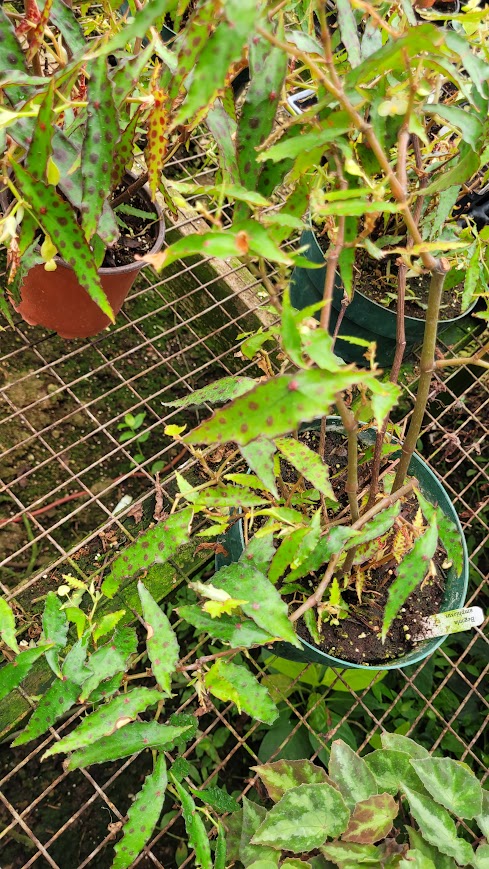
Its narrow pointed leaves have red spots and red edges. The reference shows the shape of a more developed plant. Photo by Maberjay at Steve’s Leaves, original photograph, CC0. Botanical reference: Singapore National Parks Board.
I love that leaf shape. If the cuttings take, there will be something to see higher up in the jar. It looks a little sparse with the plants I had; there’s time to find other plants and adjust it.
Illustrating the stages I didn’t photograph
My hands were busy, and shooting through glass also means reflections. I gave AI the finished pictures and my sequence, then checked the illustration myself: rocks before plants, moss only in patches, pale gravel in front. The pictures show the order, not exact proportions or a photographic record.
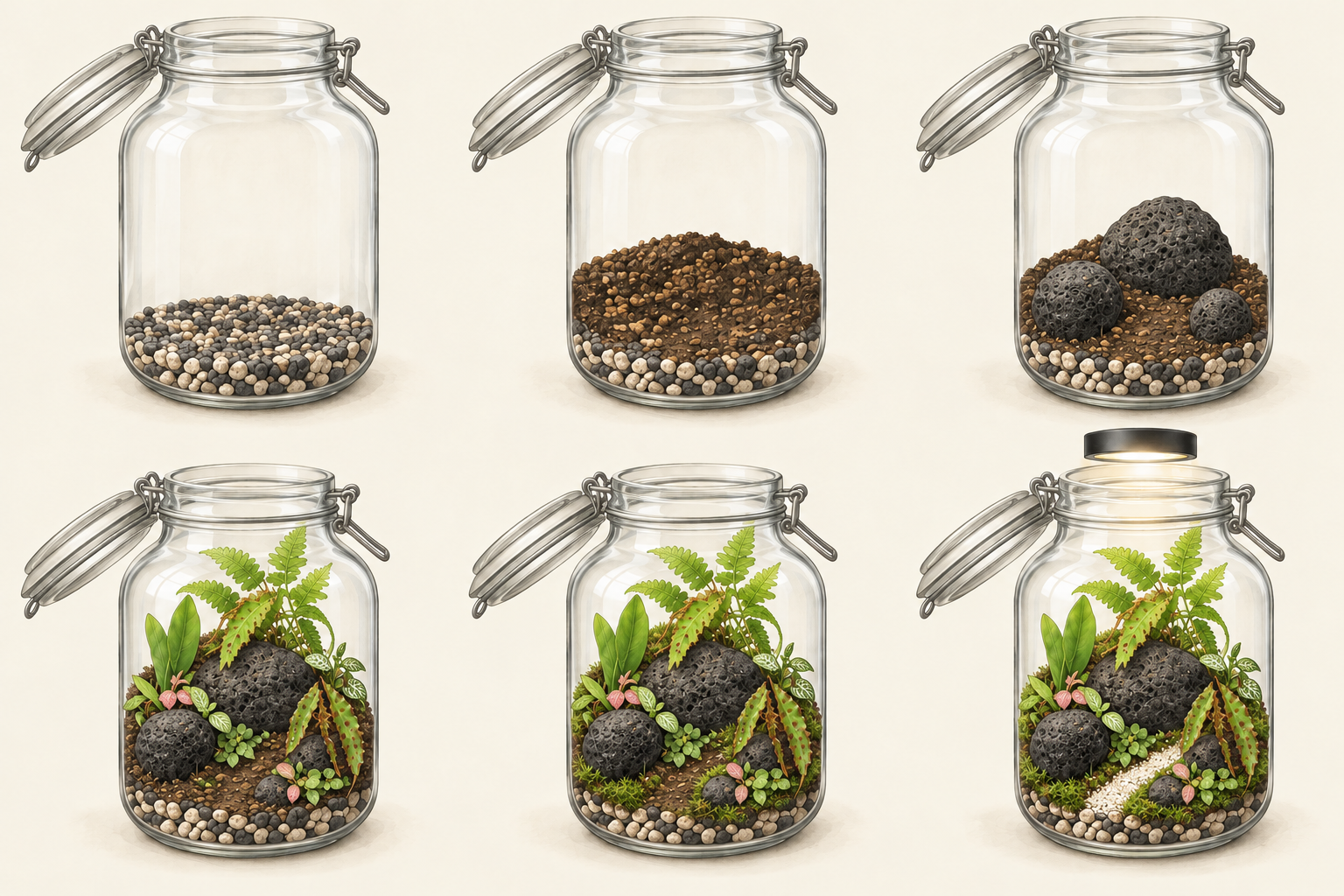
See the materials, illustrated steps and layer demonstration here.
I want to watch it grow
I’d rather leave room for height and denser growth than fill the jar for a perfect first photograph and then constantly cut it back. The layout can change, once the plants have settled. The room was still 25–26°C when I made it. I’m not sealing it completely for now; when it cools I may try keeping the lid closed longer. Ventilation and watering are things to judge as I go. For now I’m happy to leave some air and see what those begonia leaves do.
What did this bring to mind?
Share a memory, a different view, or a thought you would like to continue. No account is needed. Comments appear after review; readers’ words remain in their original language.
Leave a comment
Conversation
Loading comments…