Originally recorded 2026-10-14; added to my personal website on November 11, 2026.
First the stones need to sit firmly; then I find the plants their places and fill a few gaps with moss. This is my first build, recorded October 14.
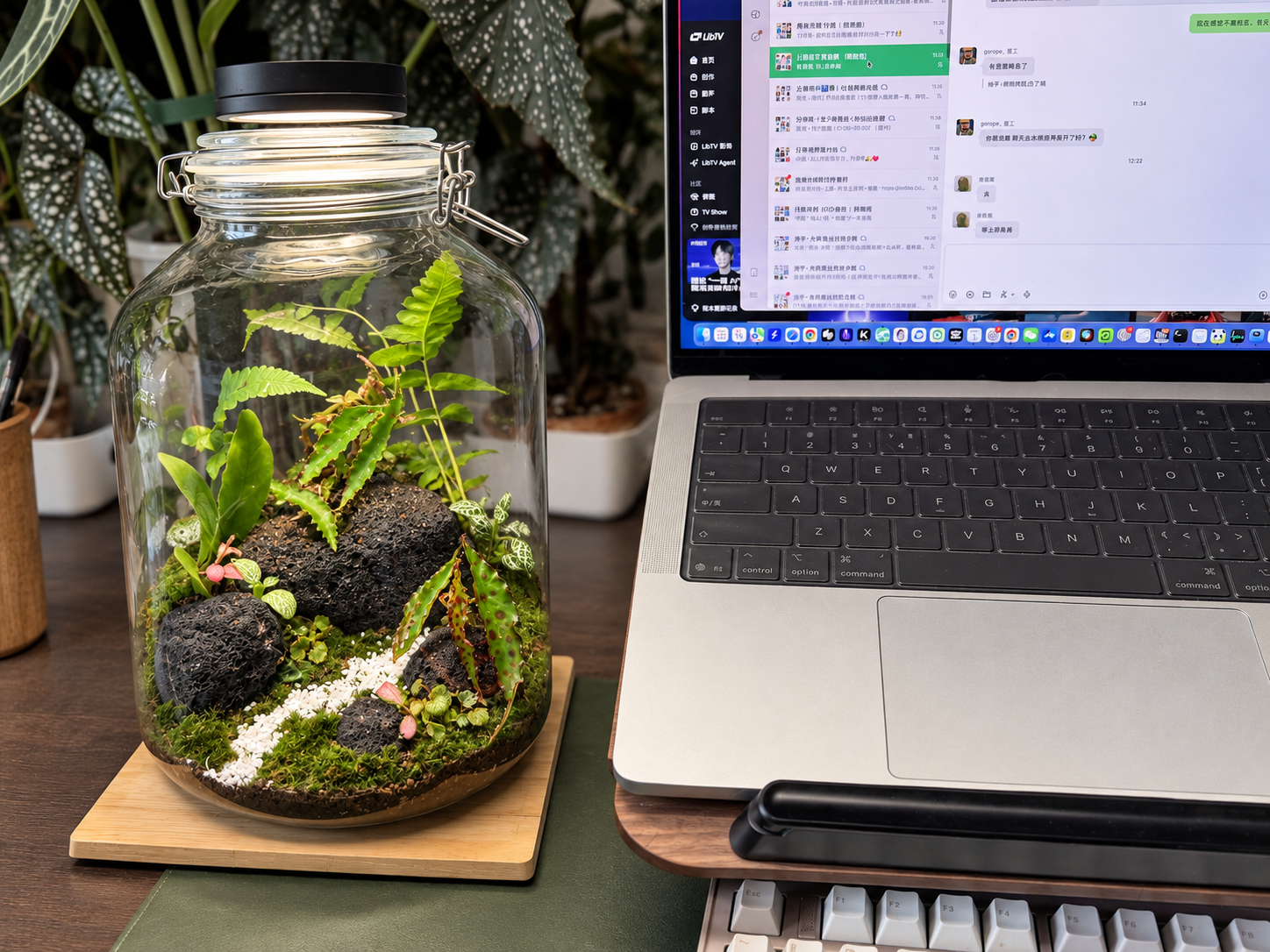
Two lidded jars cost 24 yuan, or twelve each. That is the jar price alone. Many of the plants and materials were already on hand. Working through the narrow opening took more arranging than I expected. The build took about half an hour to an hour, and I forgot to photograph it. The finished photos are mine. The AI illustrations and layer animation reconstruct the order, not the precise proportions or plant shapes.
Materials I used
I did not weigh the quantities. The jar has a lid and a small lamp of a few watts. I didn’t record the volume, exact wattage or lighting hours. For the base I mixed fine pumice and lava particles, roughly 1–3 mm by eye, then used granular soil with a little fine akadama. I chose black lava rocks in different sizes, short moss for selected patches and a little ordinary white gravel for the foreground.
There was dwarf saxifrage, nerve plant trimmed from an older tank, Begonia amphioxus leaves to try as cuttings, and about three ferns whose varieties remain uncertain. A layer of particles does not make excess water harmless in a jar without drainage.
Watch the layers
Play the demonstration or choose a step. It illustrates the arrangement; it is not footage of planting or growth. The controls and original diagram are in Chinese.
从一只玻璃瓶开始
点下播放,看看底层、土、石头和植物如何依次放入。
每一步停留约3秒;可以暂停,慢慢看。
Six steps
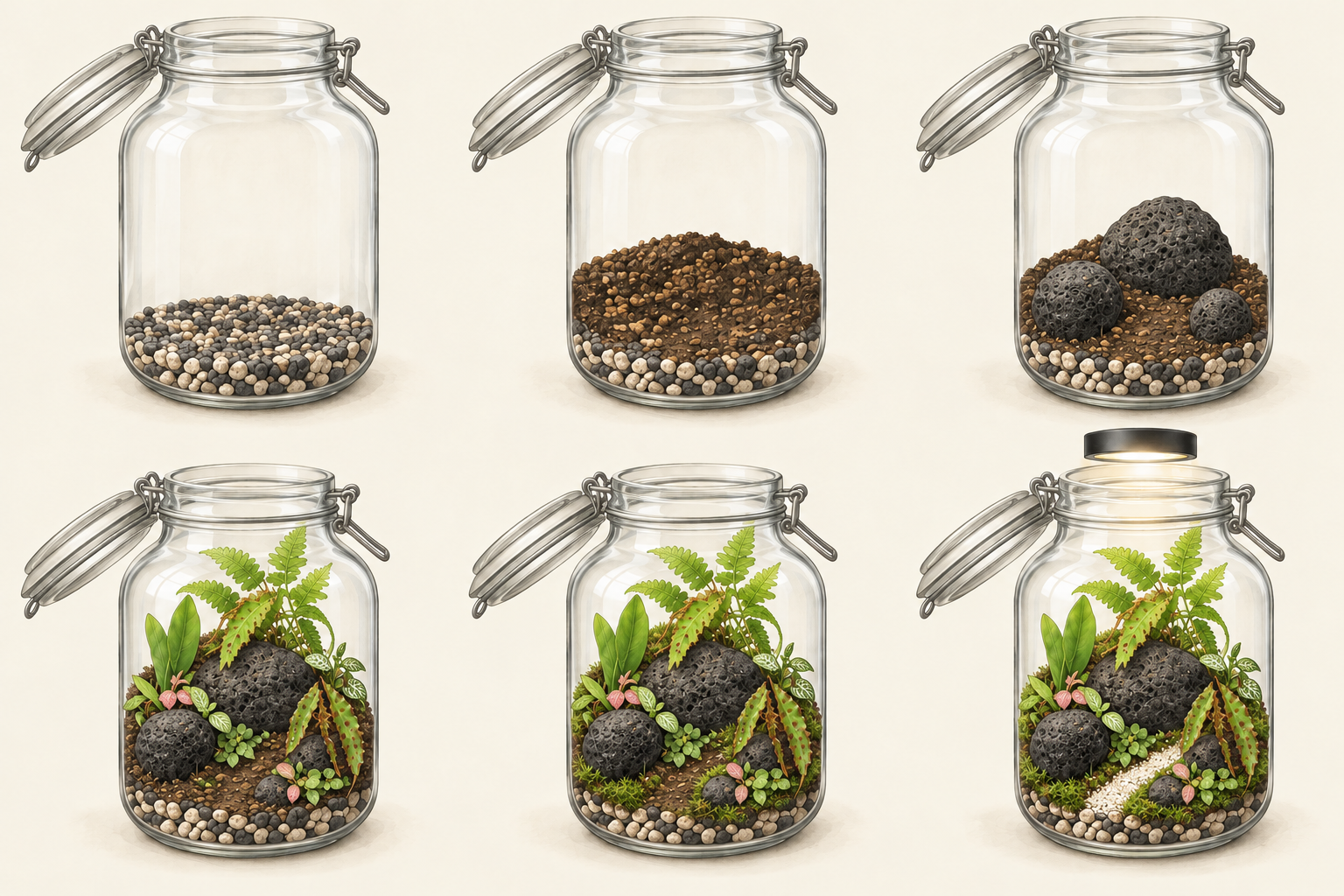
- Lay the fine pumice and lava mixture at the bottom. This jar has no drain.
- Add granular soil with a little fine akadama. I used no fixed ratio. Shape the ground with the future positions of the stones and plants in mind.
- Place the black lava rocks before planting. Different sizes establish depth and the front-to-back arrangement.
- Place the dwarf saxifrage near a crevice, then the nerve plant, begonia and ferns. Plant before filling in moss so the leaves have room.
- Add patches of short moss around stones and where green is needed. Leave some black rock, soil and foreground visible.
- Finish with pale gravel to set off the dark rocks and foliage. I added a little light and began observing; lighting and lid position were still experimental.
What I learned while making it
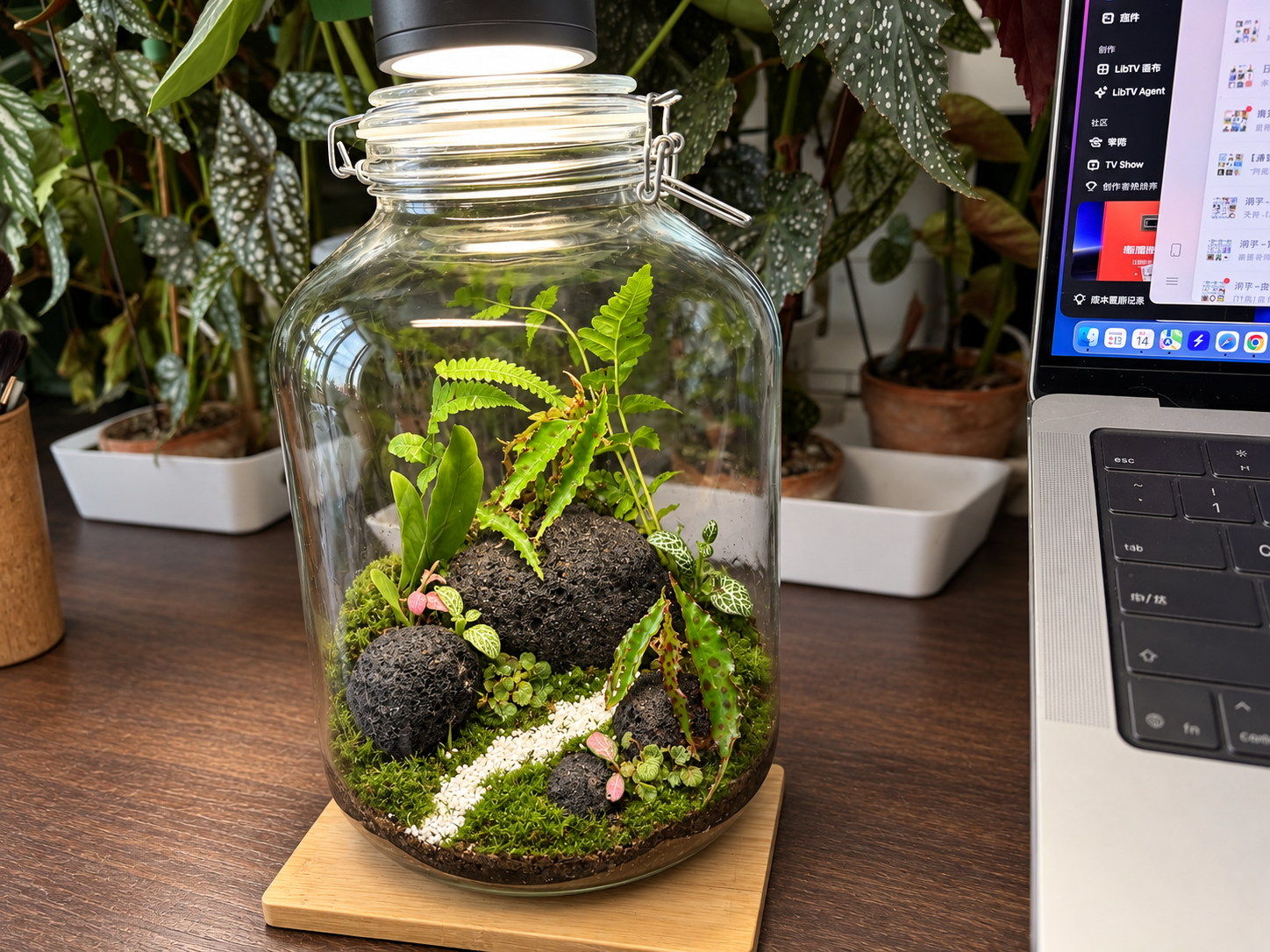
Pouring soil was the hardest part. Using my hand didn’t send it where I wanted. Next time I’d try a funnel or tube. Some ferns looked small on their own but left too little space for their fronds to unfold in the jar. The nerve plant came from pruning an older tank. My begonia had done well in a covered square tank, then lost leaves when I gave it less attention. I saved leaves that looked alive to try as cuttings. Rooting and adjustment to this new jar remain open questions.
Caring for this particular jar
The room was about 25–26°C when I made it. With the lid and a lamp, I worried about heat in such a small space, so I didn’t close it completely. I had thought of trying a longer period with the lid on once the room cooled to about 20°C and opening it at night if needed. That was my trial plan, not a tested temperature or ventilation schedule for all moss jars.
I’ll watch the leaves, persistent condensation and whether the soil is too wet before changing anything. At the time of writing this was only my first build and I wasn’t offering jars for sale.
For general care, a bright position out of direct sun and attention to heat from lamps or sunlight are helpful. Keep the substrate damp rather than saturated; a lack of droplets alone isn’t a reason to water. Persistent heavy condensation or wet leaves may call for airing and another look. Adjust plants that crowd each other or press against the glass, and keep an eye on dead leaves or unusual changes. References: Mississippi State University Extension and Oklahoma State University Extension. The temperature, substrate and plants in the actual jar still come first.
For now I’ll keep this one and come back when there is something new to record. Read my planting diary.
What did this bring to mind?
Share a memory, a different view, or a thought you would like to continue. No account is needed. Comments appear after review; readers’ words remain in their original language.
Leave a comment
Conversation
Loading comments…