
A few days ago, Runyu added me on WeChat. Then I saw him say on Moments that I'd put a lot of care into my videos.
I was quite happy. They'd watched the characters and stories I'd thoughtfully put together, and they were willing to introduce the work to more people.
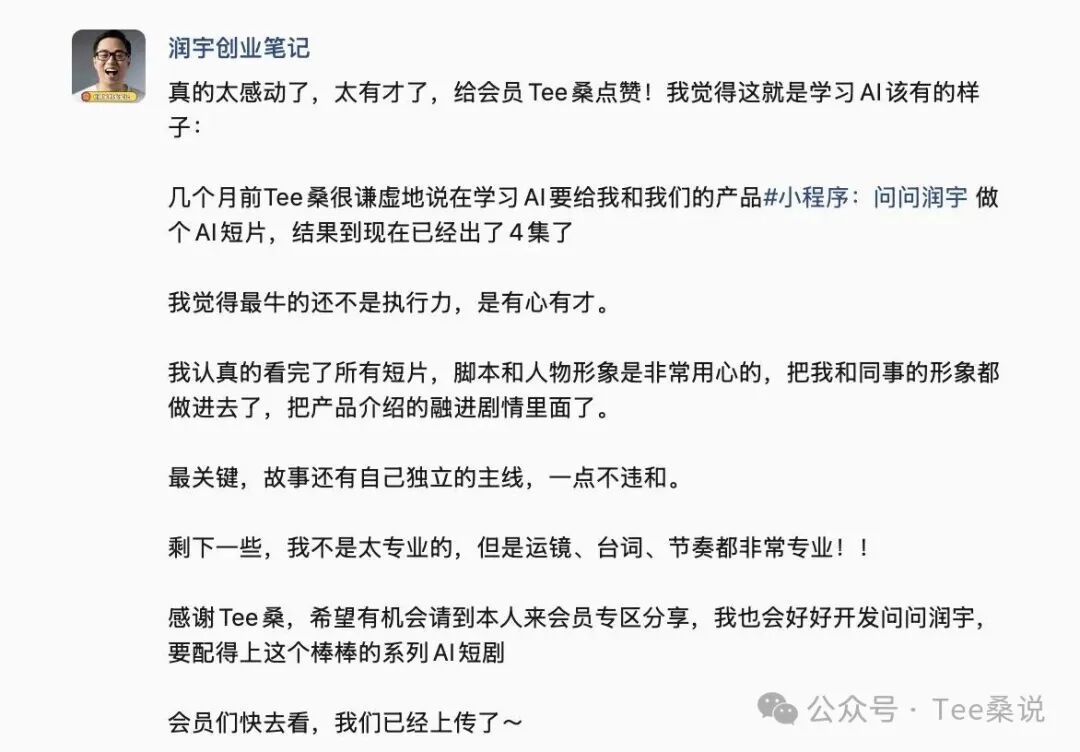
Recently, the Runyu members' area published a piece called “Tee Sang and His Six AI Videos.” I gave the team some more details about my experiences. They organized the story, included the videos, and added feedback from members. Reading it, I felt that what I was doing had been understood. That was very satisfying.
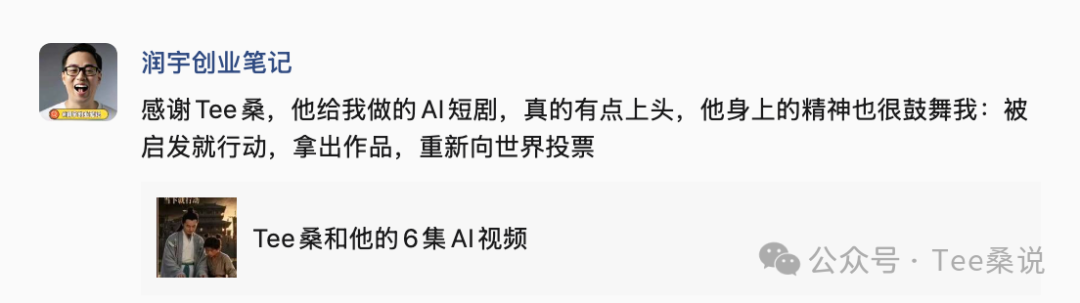
I'd like to take this opportunity to tell the story of this connection from my own perspective too.
When I first opened Ask Runyu, the AI Q&A mini program, I was asking how to offer watercolor services. I hadn't imagined that a little over two months later, I'd be turning its features into stories set in ancient China, making them episode by episode all the way to number six, and getting to talk with Runyu as a result.
Most friends who know me know me as Tee Sang, the watercolor painter. I live in Shanghai and have spent fourteen years as an independent creator. I've taught watercolor, taken painting commissions, and organized art study trips; I also take photographs and write. I've accumulated quite a lot of work over the years, yet I still get stuck when it comes to introducing myself afresh and turning my abilities into suitable services.
01 Starting with a question of my own
A friend first recommended Dedao Brain to me. Later, through livestreams, I came across Luo Zhenyu and then Wang Runyu. I can't quite remember which interview it was, but I remember being moved by some of Runyu's judgments about the future.
I also admired his approach to marketing. Watching the livestream, I could see how he introduced products and encouraged purchases. He was playing with his cards on the table, but I didn't feel he was selling me anxiety. Instead, I found it convincing. Later, I joined the paid community and watched Ask Runyu take shape step by step in the group.
I checked my records. The first time I used it was July 8.
I told it about my situation: I'd been doing watercolor for years and had built a following by sharing my work, but after I stopped posting, those connections had weakened. I was considering accompanying people on urban sketching outings and offering an online painting study room, but I wasn't sure how to describe these services or how to begin.
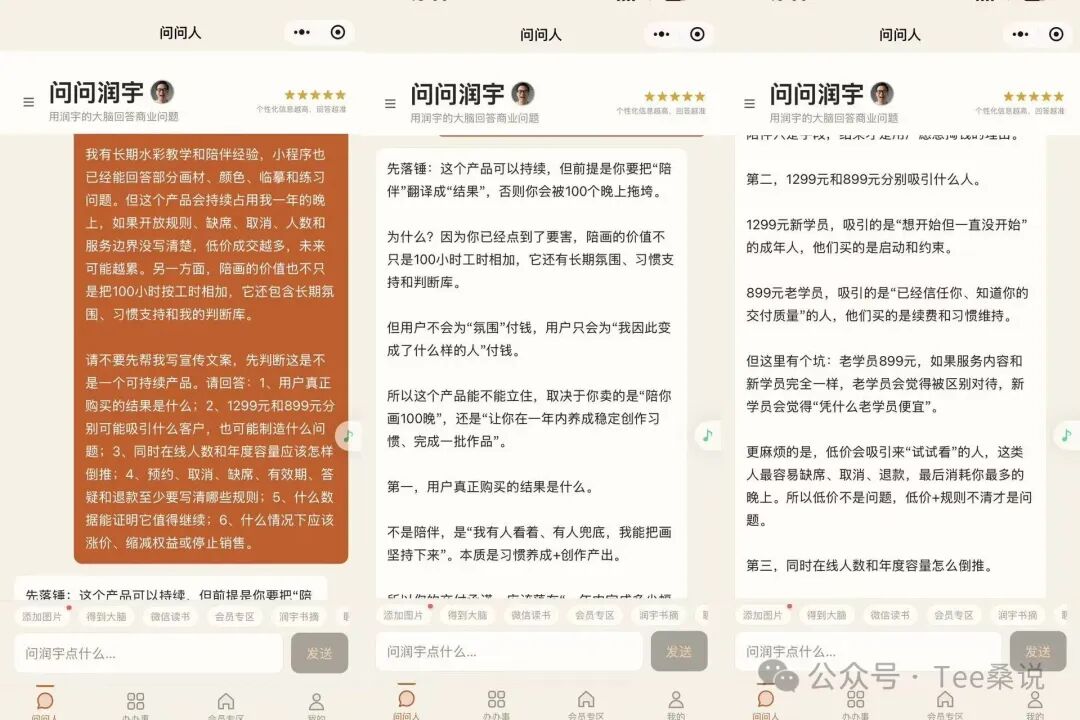
One useful idea it gave me was to reconsider what people come to painting for. Besides technique, they may also need relaxation and company.
That suggestion matched my own teaching experience. The watercolor I teach is mainly about personal enjoyment and well-being, without entrance-exam requirements. Sometimes, partway through a course, students feel they're making less progress and their enthusiasm drops. Painting is ultimately something you do for yourself. You need to want to pick up the brush again.
Following that direction, I discussed how to design the services, think about pricing, and decide what to try first.
Its way of answering was useful to me. First a judgment, then an action I could take. After reading, I felt I could try something, come back, and continue the discussion.
I'm happy to get started on creative work that interests me. But when it comes to charging for it or introducing a service to others, I tend to overthink. The specific suggestions from Ask Runyu made it easier to move things forward.
Of course, suggestions still need to be judged against my own circumstances. Codex already has a lot of context about me, so I also wanted to compare the two sets of answers and see which suggestions suited me better. I'm still developing my commercial judgment. These references help me learn, but in the end I still need to choose and act for myself.
02 Watching him build made me want to try it myself
Later, my interest in Ask Runyu gradually extended to how it had been made.
To be honest, I didn't ask it direct questions very frequently. Over these two months, I've spent more time using Codex for projects. But I've kept watching changes to the mini program, and reading the experiences and practical steps shared in the members' knowledge system.
I appreciate Runyu's willingness to share what he's done and the judgments he's accumulated. There are commercial things I can't yet do myself, but I can try a feature or a method on my own projects.
Whenever I saw him add a feature, I'd wonder whether I could use it in my mini program or website.
Ask Tee Sang grew out of that influence. Runyu's videos drew my attention to the WeChat ecosystem and the opportunity to make mini programs. I thought the years of experience I'd gained learning and teaching watercolor could also be organized into an open judgment library.
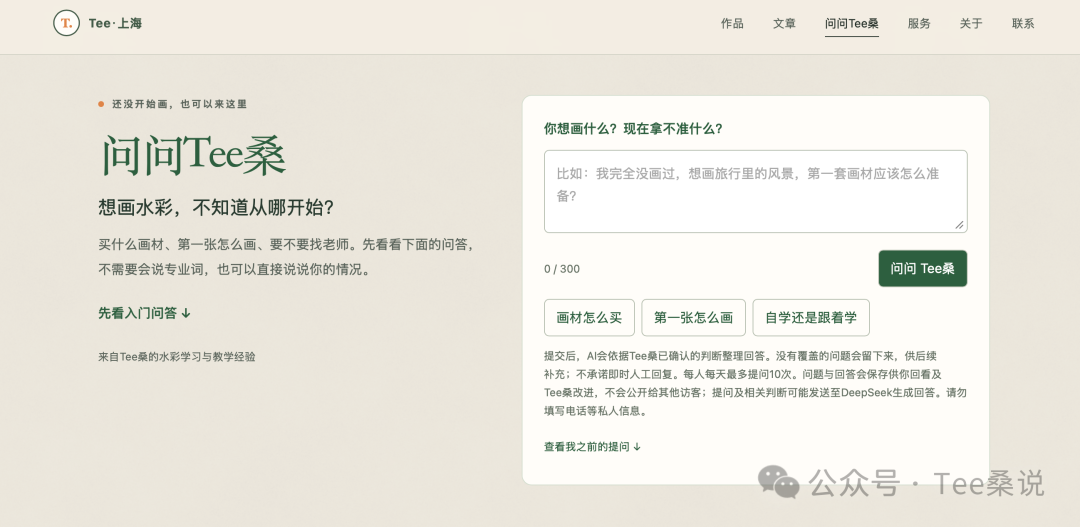
Former students, or friends asking for advice, could begin here when wondering which supplies a beginner should buy or why a painting keeps getting muddier. My personal website and WeChat mini program now use the same judgment library.
The mini program's features were largely working, but I ran into account-type restrictions when submitting it for review. The platform's feedback at the time was that AI Q&A services were not yet open to individual accounts, and it recommended applying under a business account type. I may still need to adjust the architecture or the form of the features. Since the existing functions already largely met my needs, I haven't continued changing that part for now.
But I really enjoyed making it.
“Thinking of something, trying it with AI, watching it move forward one version and one feature at a time, until it actually works.”
When I hear Runyu talking excitedly about products on a livestream now, I think: ah, I know that feeling.
I have a habit of paying attention to the tools someone uses and the things they do once they've earned my trust. Where I can, I try doing them myself. With some shared experience, many things I'd previously only understood in words slowly become things I can actually feel.
03 I put the strategist into a story set in ancient China
After Runyu's birthday livestream in early August, I had an idea about playing basketball in historical costumes.
Ask Runyu feels like a strategist, so I thought a story set in ancient China would suit it, and I wanted to make one with AI.
At the time, I even recorded myself talking about it: the details might not come out exactly as I wanted, but I could at least make the idea clear. For me, turning something in my head into a video I could actually see was interesting in itself.
I went on to make several episodes, putting features such as short-video script revision and “Read a Book with Me” into the plots, and creating character versions of Runyu, Xingxing, and other team members.
For example, episode four was about revising short-video scripts. Its cover read, “Real Skills: Don't Hide Them on Page Seven.” Once a feature has characters and a situation, viewers have another way to understand it.
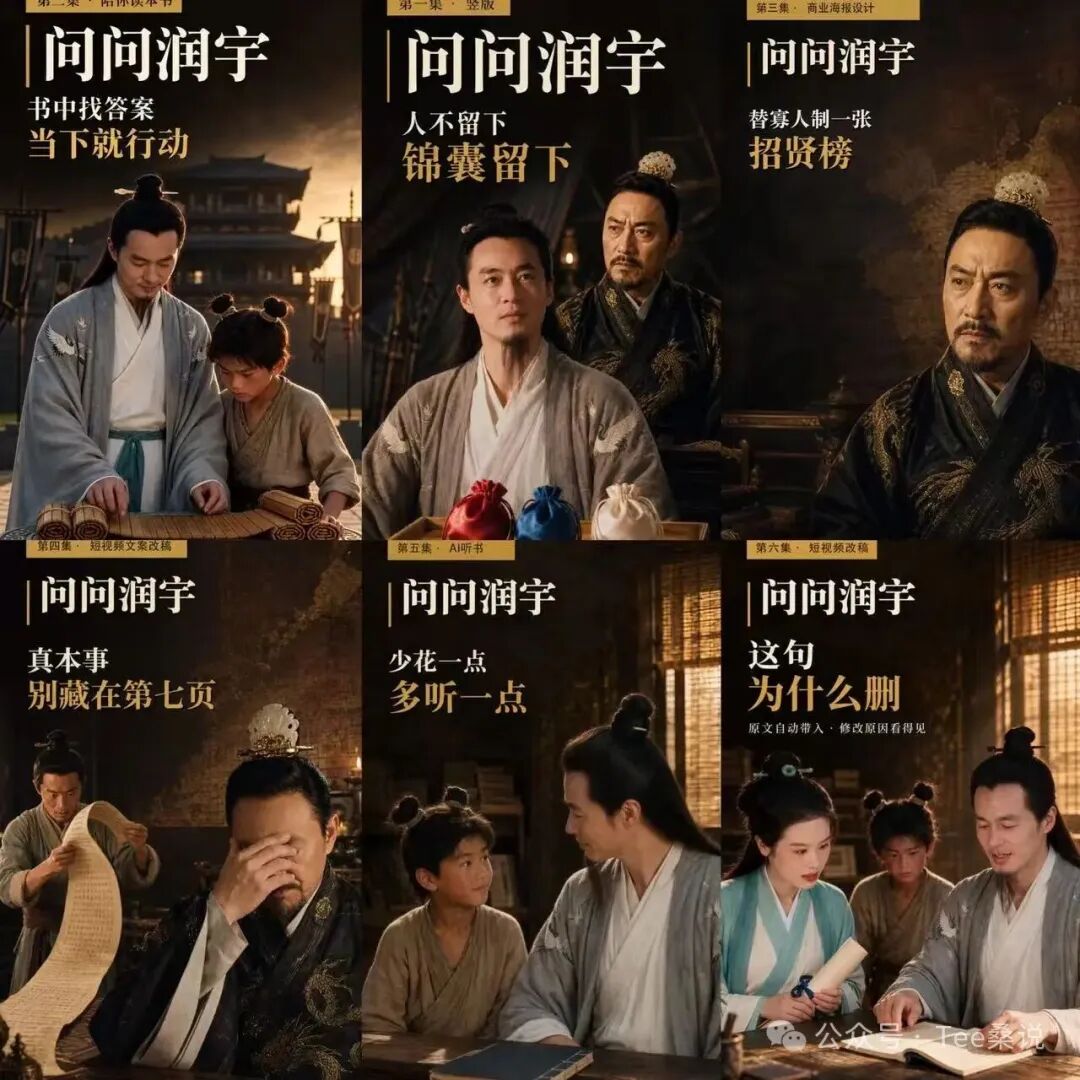
I need to consider what problem the character faces, why they need the feature, and how things develop next. How to arrange the images, what state the characters are in, where the story should move ahead, and where it should pause: I have to judge all of these myself, then adjust them repeatedly with AI.
My past experience in painting, photography, and writing all comes into play. Through these works, I've also been gradually building a process from idea and script to images, editing, and the finished film.
I posted the edited videos in the group. Xingxing contacted me, and some other people added me too. I wrote in my notes at the time that my work was slowly being seen, and that felt like a good thing.
The series has now reached episode six. I'm also more interested in applying this way of creating to other products. Could a story help people understand a service that's hard to explain in a few sentences? What kind of images would suit the feeling a product wants to convey? These are things I'm willing to keep thinking through.
04 Someone else appears on camera for me too
Alongside the story films, I've been continuing to create an AI virtual character called TEVIA.
To me, she's a little like a stand-in for myself in moving images.
When I have her paint watercolor by a window, read quietly, or go out with a camera, I'm using those images to convey my own preferences and feelings about life. Her appearance is virtual, but the taste, values, and attitude to life behind her are closely connected to me.
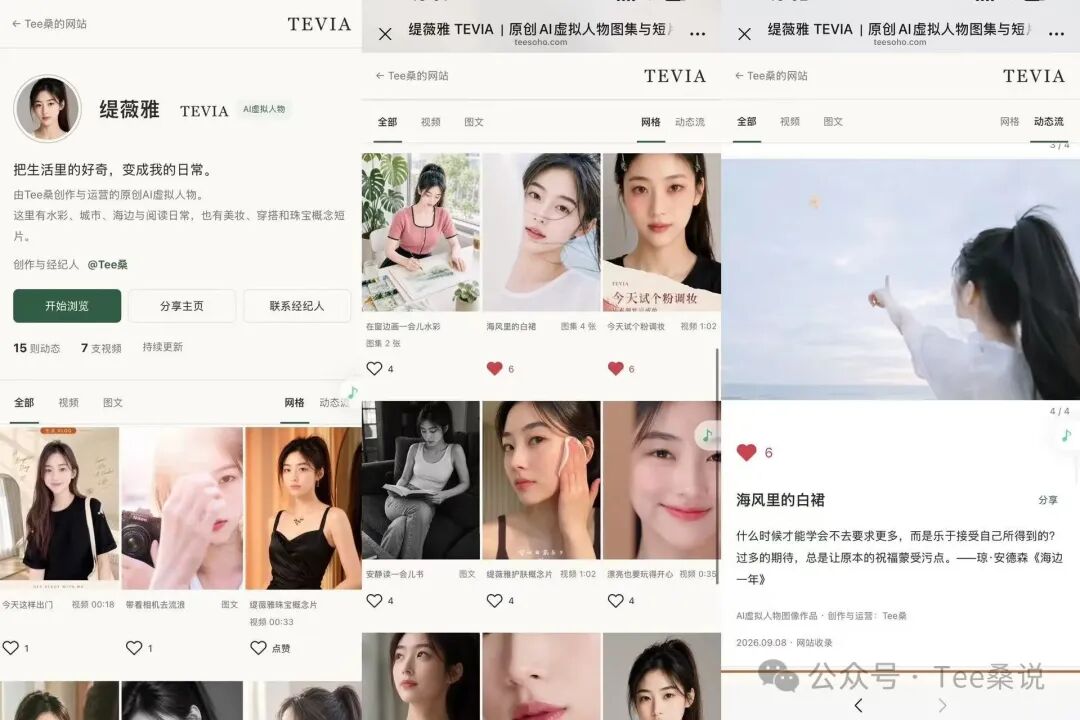
“I hope she slowly develops a sense of a life of her own. Looking at her images and words, people might also sense what the creator behind her likes and cares about.”
I've already begun trying scenes that bring her together with products, such as headphones and everyday clothing. These are concept pieces for now. They also let me show concretely how a virtual character might participate in brand imagery and product presentation.

These experiments are gradually forming two kinds of collaboration I'd now like to take on: creative AI short films about products or services, and virtual-character advertising, product scene images, and short videos centered on TEVIA.
If you have a product, a service, or an idea you'd like to turn into images, you can contact me through a comment on my WeChat official account or a private message. Start by telling me who it's for and what you'd like them to remember. Then we can work out together what kind of content would suit it.
I still care a great deal about whether the images look good and whether the expression is accurate. What I used to do through watercolor and writing now has a few new forms.
05 I want to see what happens four years from now too
I've renewed my membership through 2030.
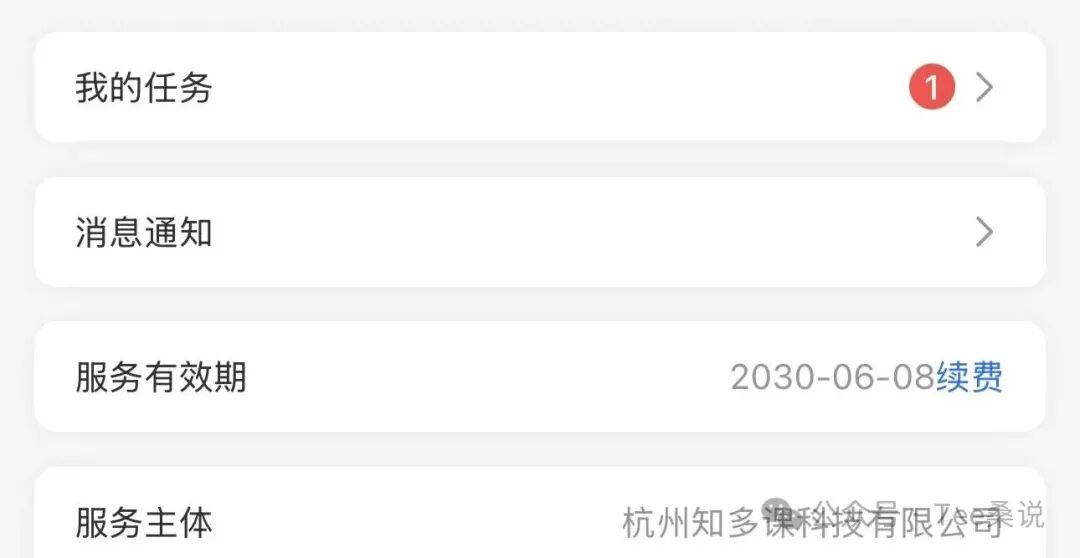
For me, the Q&A mini program, the members' knowledge system, and the chance to watch how someone who keeps creating gets things done together make it feel well worth it.
I'm grateful that Runyu is willing to share the paths he's taken and the things he's done. I can consult them with my own questions in mind, and try them out on my own projects. The mini program, videos, and new experiments left by these months make that influence tangible.
AI and mini programs have changed quickly in just these two months. It's hard to imagine what Ask Runyu will look like in four years, or whether it will have become an app by then. That's only my imagination, but I'd very much like to keep watching.
“When the time comes, I'd also like to return to this article and see what became of the things that are only just starting to take shape now.”
The views, experiences, and final judgments in this article are the author's. AI assisted with organizing the text and generating illustrations.
What did this bring to mind?
Share a memory, a different view, or a thought you would like to continue. No account is needed. Comments appear after review; readers’ words remain in their original language.
Conversation
Loading comments…