
Over the past month or so, I have been using AI frequently while also buying quite a few paper books.
That may sound a little contradictory. If there is something I do not understand now, I can ask AI. Give it an ebook, and it can quickly pull out the key points. Why buy the book and turn the pages slowly myself?
But for me, these two things have lately been connected. AI has helped me make more things, while making it increasingly clear what I still do not understand.
The immediate reason for buying books was watching livestreams and interviews. Recently, I have been watching Dedao and interviews by Wang Runyu and Liu Run. Guests sometimes bring their new books. When I have learned something from their views and judgments, I want to find out a little more.
I have noticed a habit of mine: once someone earns my trust, I become willing to follow a little closer through my own actions. I look at what they use and how they work. If they have written a book, I am very happy to buy it.
After all, a book often brings together years of its author's experience and thought. For the price of a cup or two of milk tea, I can read more fully about how that person thinks. That seems good value to me.
So recently I bought Liu Run's Shengsuan, as well as Where Does Creativity Come From? and two other books in the same series. Some were books I could not find on WeChat Reading when I bought them. I also bought The Almanack of Naval Ravikant. I had already read the ebook, but still wanted a paper copy by the bed to dip into occasionally.
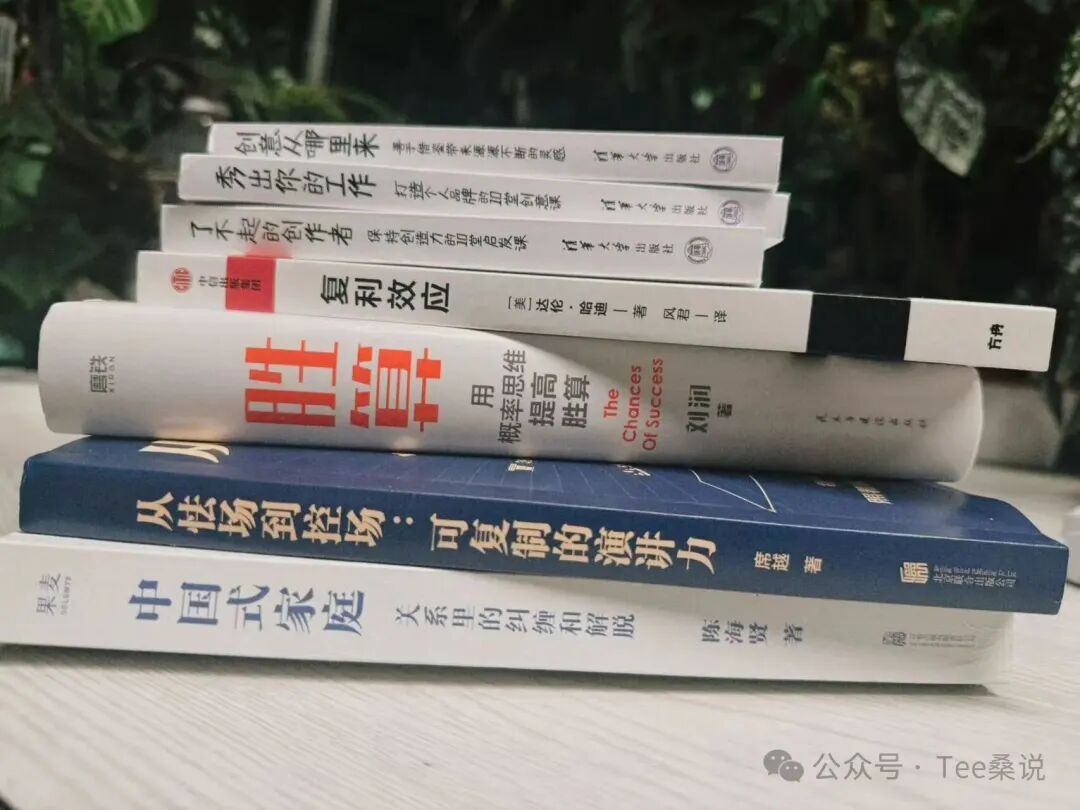
Over the past few months, I have also begun visiting the nearby Hongkou Library more often. It is about three kilometers from home. Under the borrowing arrangement I signed up for, I can take out twenty books at a time, with no deposit and no borrowing charge.
I used not to think there was anything special about that. Now that I have things I want to understand, I have begun to notice how good the resources around me actually are.
And many of the things I want to understand emerge while I am doing something.
A while ago, I began wanting to understand a little code so that I could communicate with AI more clearly. Recently, making AI videos has made me want to learn more about storyboards, scripts, and camera movement. What kind of shot explains something clearly? How do several images connect? These all need learning.
There are a few recent videos I am quite pleased with. One reason is that, before generating them, I already had the images I wanted in my mind.
In my attempts, a specific, visual script or a fairly clear reference made it easier to get results close to what I imagined. Of course, things still failed and needed redoing. But at least I knew what I was waiting for, and could more easily judge which version was better suited.
If I have not thought it through myself and only say, "Make me something beautiful," AI can still produce something. Whether its version of beautiful is the one I want is another matter.
The same applies to paid consulting on putting AI to practical use. Being comfortable using it myself does not mean I know how to help someone else use it comfortably. Some people are stuck on setup or subscriptions. Others have daily work that does not need my entire collection of tools at all. I still need to understand their circumstances and judge what suits them.
"Being able to do more makes me willing to try. Once I start, I discover what is missing and want to learn a little more."
In an earlier article, I used a very rough comparison. Suppose my understanding of something scores zero, and AI produces a result worth sixty. I might think it is excellent. But that does not mean my own ability has reached sixty.
Once I understand it more deeply, perhaps reaching eighty, I may finally see where that same result could improve.
The numbers are only an illustration. What I mean is that I need my own grounds for judgment to decide whether something is usable and whether it is worth revising further.
In the past, even if my eyes could recognize something, my hands might not be able to achieve it. Painting takes practice, and filming and editing have technical barriers too. AI now helps me cross some of those barriers, making it easier to turn an idea in my head into something visible.
That is precisely why I want to get better at recognizing what I see.
Reading is only one way to do that, of course. Looking at work, going to places, doing projects, and listening to feedback also help me develop judgment. Paper books happen to offer a few practical conveniences as well.
After spending a long time vibe coding and staring at a screen, I want a different way to read. Putting a book in my bag when I go out, or leaving electronic devices outside the bedroom and turning a few pages before sleep, feels good.
When I find something interesting, I can write a few notes directly on the page. So much can now be done by typing, speaking, or using AI that I also want to keep a little room for writing with a pen.
I still read ebooks and ask AI to help organize material. But I want to remind myself that receiving a summary of the key points does not mean I have understood the book. Reading on myself lets me see how the author uses examples and reasons things through, and consider whether I agree.
"I do not want to skip all of those steps too."
Now that everyone can use AI, I also ask myself: with the same tools in my hands, what little extra can I bring?
I am still searching for an answer as I work. At least for now, there is plenty I want to read, and I am willing to bring what I read back into my paintings, videos, and actual work to try it out.
I want to keep a few of these books beside the bed and put one in my bag when I go out. I can dip into them when I have time, without hurrying to turn every one into a summary.
"Have you recently read an ebook and still wanted a paper copy to keep close by? I would be happy to hear about it."
The views, experiences, and final judgments in this article are the author's. AI assisted with organizing the text.
What did this bring to mind?
Share a memory, a different view, or a thought you would like to continue. No account is needed. Comments appear after review; readers’ words remain in their original language.
Conversation
Loading comments…