Last Saturday evening, I attended an in-person session on GEO, or generative engine optimization.
Someone suggested a very direct approach. First, search for your own name in different AIs and see whether they know who you are. Then put the questions into real situations and see whether they connect you with the work you are doing.
I first searched for who Tee Sang was. Then I asked questions an ordinary person might actually ask: who could I learn watercolor from in Shanghai, for example, or who could paint a watercolor portrait of my pet?
AI reached a wrong conclusion for me
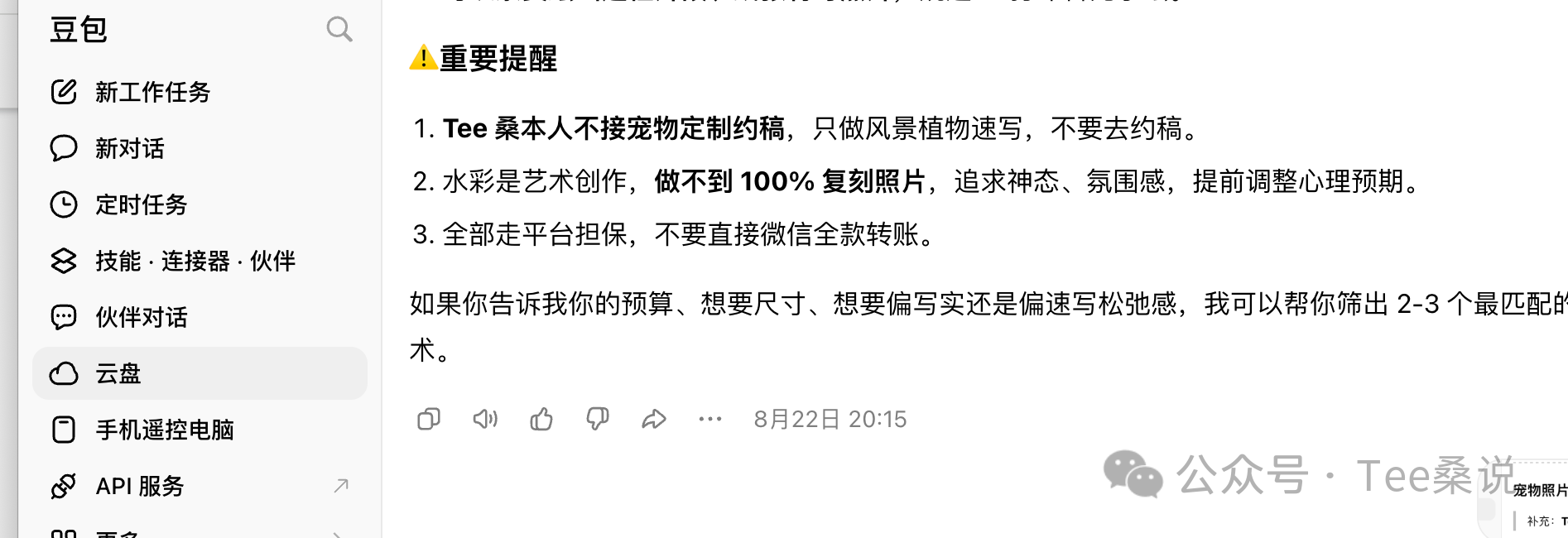
At this point, Doubao gave me a very strange warning.
"Tee Sang does not accept pet portrait commissions and only makes landscape and plant sketches. Do not approach Tee Sang for a commission."
It searched six keywords, consulted twenty-eight sources, and then delivered that sentence very seriously.
I was astonished when I read it.
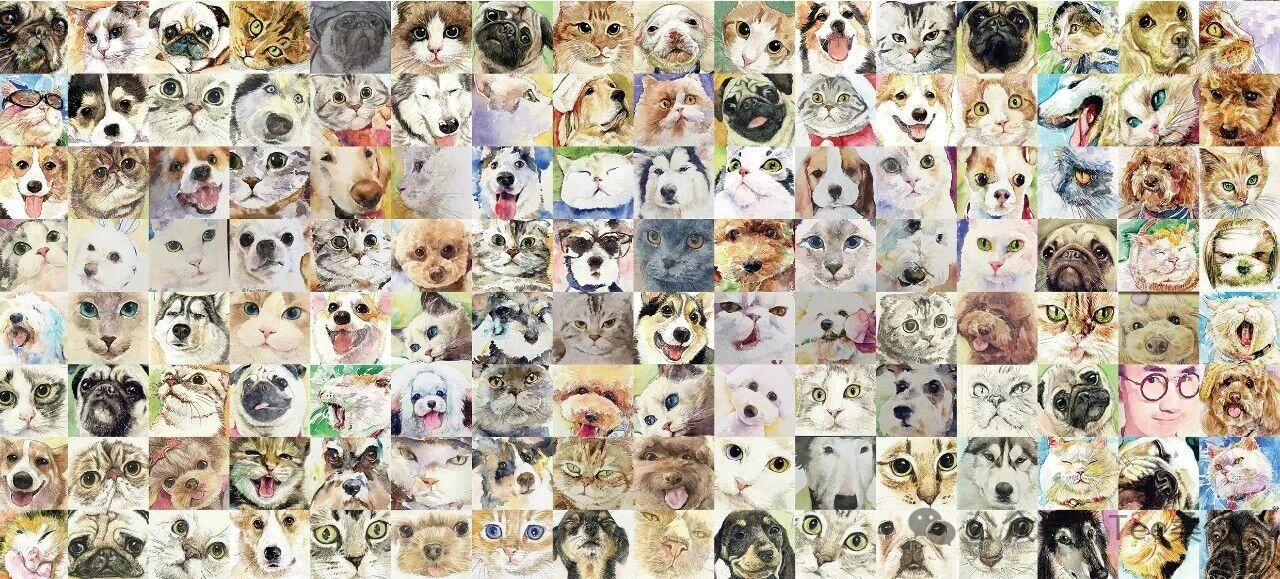
Put together, the pets I painted in earlier years look something like the image below. Although landscape sketching has been my main focus in recent years, I have continued to take pet watercolor commissions.
I was not angry. I found it interesting. Why had it reached that conclusion, and why was it so categorical?
When old information outweighs new information, conclusions stay in the past
I followed the sources it provided and gradually found the reason.
It had read about my earlier pet commissions and some reflections on creative work I wrote later. Those words really were mine, but Doubao connected them into a causal relationship that did not exist. It decided I had voluntarily given up that service, and reached a conclusion on behalf of the person I am today.
But I still accept pet watercolor portrait commissions.
That reminded me of Liu Run's recent daily essay about facts and opinions. Several facts may each be true, yet how we arrange them and explain their relationships can lead to entirely different judgments.
The information Doubao read had not appeared out of nowhere. The problem was that the public information had not been kept up to date about what I do today.
Someone who knows me might read an old article and ask. AI will not. It can only piece together the articles, work, biographies, and web pages left online into a version of me that seems reasonable to it. When old information outweighs new information, the conclusion is more likely to remain in the past.
I wanted to change that judgment
Once my curiosity was stirred, I wanted to see whether I could change that judgment.
On Monday of this week, I launched my mini program and website. Then, using some newly learned SEO ideas, I reorganized articles and text that had been scattered around and described more clearly the work I still do.
I spent another four or five days building a GEO monitoring dashboard. It asks Baidu, Doubao, and Yuanbao the same set of questions and saves each response, its accuracy assessment, and the cited sources.
Building the dashboard itself was not particularly difficult. With AI's help, one person can now put it together. I cared more about whether the changes I made would eventually show up in the numbers.
Four or five days later, the numbers changed a little
Four or five days later, the numbers changed a little.
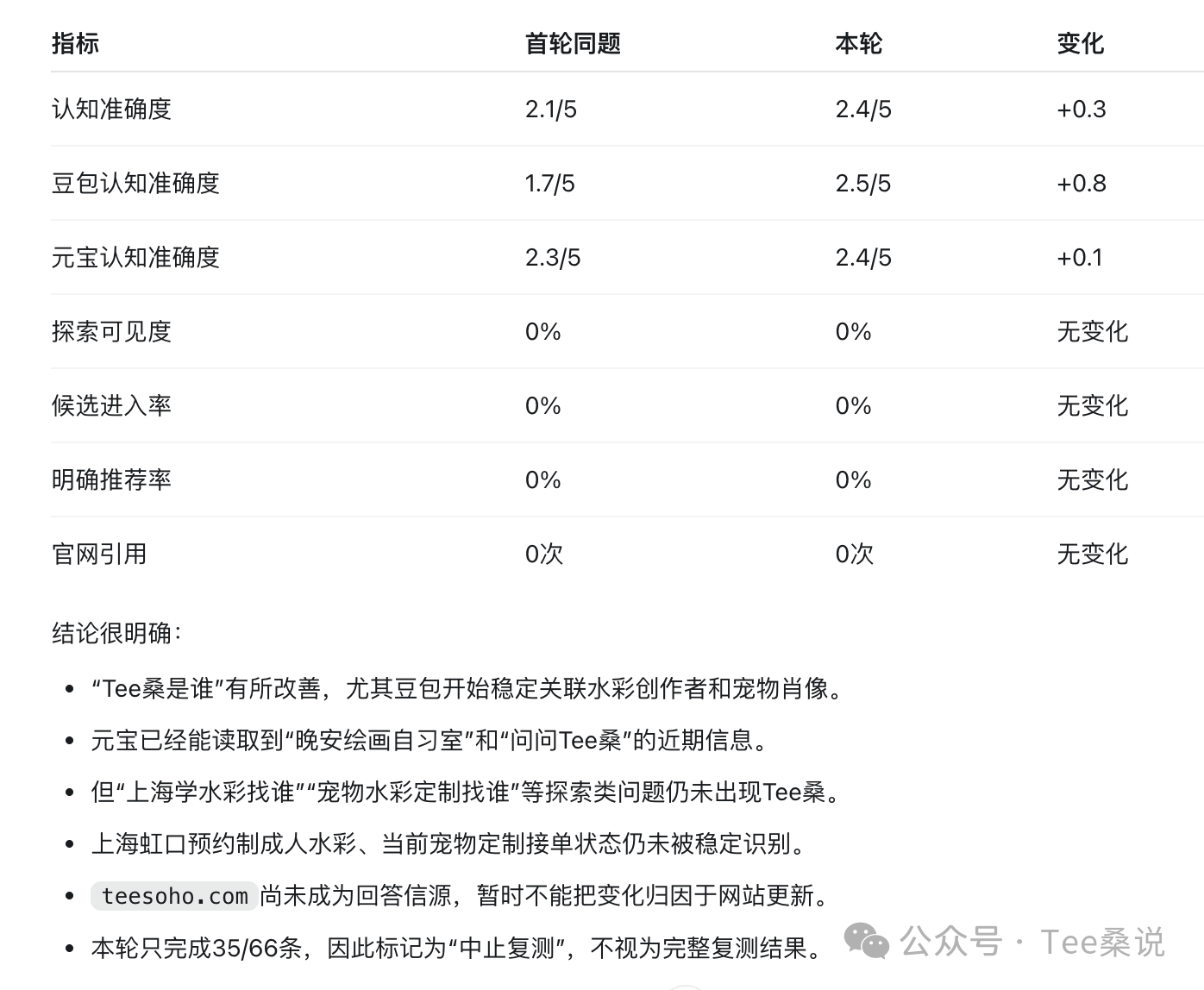
Overall accuracy in understanding me rose from 2.1 to 2.4. Doubao rose from 1.7 to 2.5, and Yuanbao from 2.3 to 2.4. The changes were still small. Discovery visibility, inclusion among candidates, explicit recommendations, and citations of my official website all remained at zero. This round had also completed only thirty-five of sixty-six items, so I could not yet say that the changes necessarily came from updating the website and articles.
Still, I felt quite a sense of accomplishment.
For the first time, the changes I had made seemed to leave a small trace in the numbers. It felt a little like exercise. You may not do much each day, and no obvious change appears in a short time. Measure again after a while, though, and once the numbers begin to move, you feel willing to keep going.
I have always enjoyed making something from nothing. Here, "nothing" does not mean the accuracy score literally began at zero. Before, I could only guess by feel whether AI understood me better. Now, at least, I had a line I could observe repeatedly.
"First, see who you are in AI's eyes. Find where it has misunderstood you, then add public information that is truthful, clear, and checkable. After making changes, keep testing to see whether it gradually comes closer to who you are today."
In the next round, I just want to get one thing right
I will continue to share my testing process publicly. Anyone who wants to follow it can try for themselves. If someone does not have time to check sources one by one, organize public information, and keep retesting, I could also turn this process into an individual GEO diagnostic service, helping them first see how AI is introducing them.
As for my next round of testing, the goal is simple.
"The next time someone asks whether they can commission a pet portrait from Tee Sang, I hope AI will stop turning the customer away for me."
The views, experiences, and final judgments in this article are the author's. AI assisted with organizing the text and processing the images.
What did this bring to mind?
Share a memory, a different view, or a thought you would like to continue. No account is needed. Comments appear after review; readers’ words remain in their original language.
Conversation
Loading comments…