Originally recorded 2026-10-23; added to my personal website on November 11, 2026.
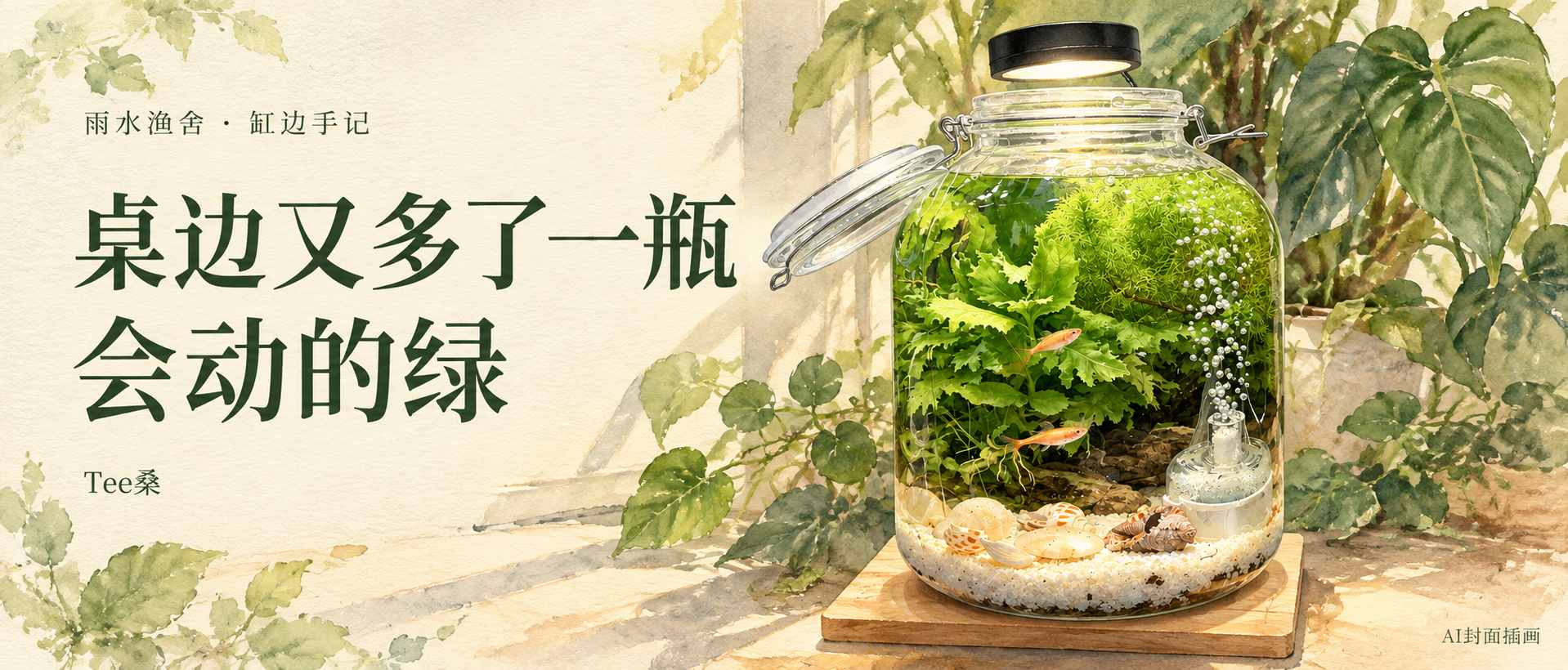
I bought two glass jars for 24 yuan. One became a moss terrarium; this time the other got plants and fish. They were sold for pickling or steeping spirits. Twelve yuan paid for the jar, not the light, plants or equipment.
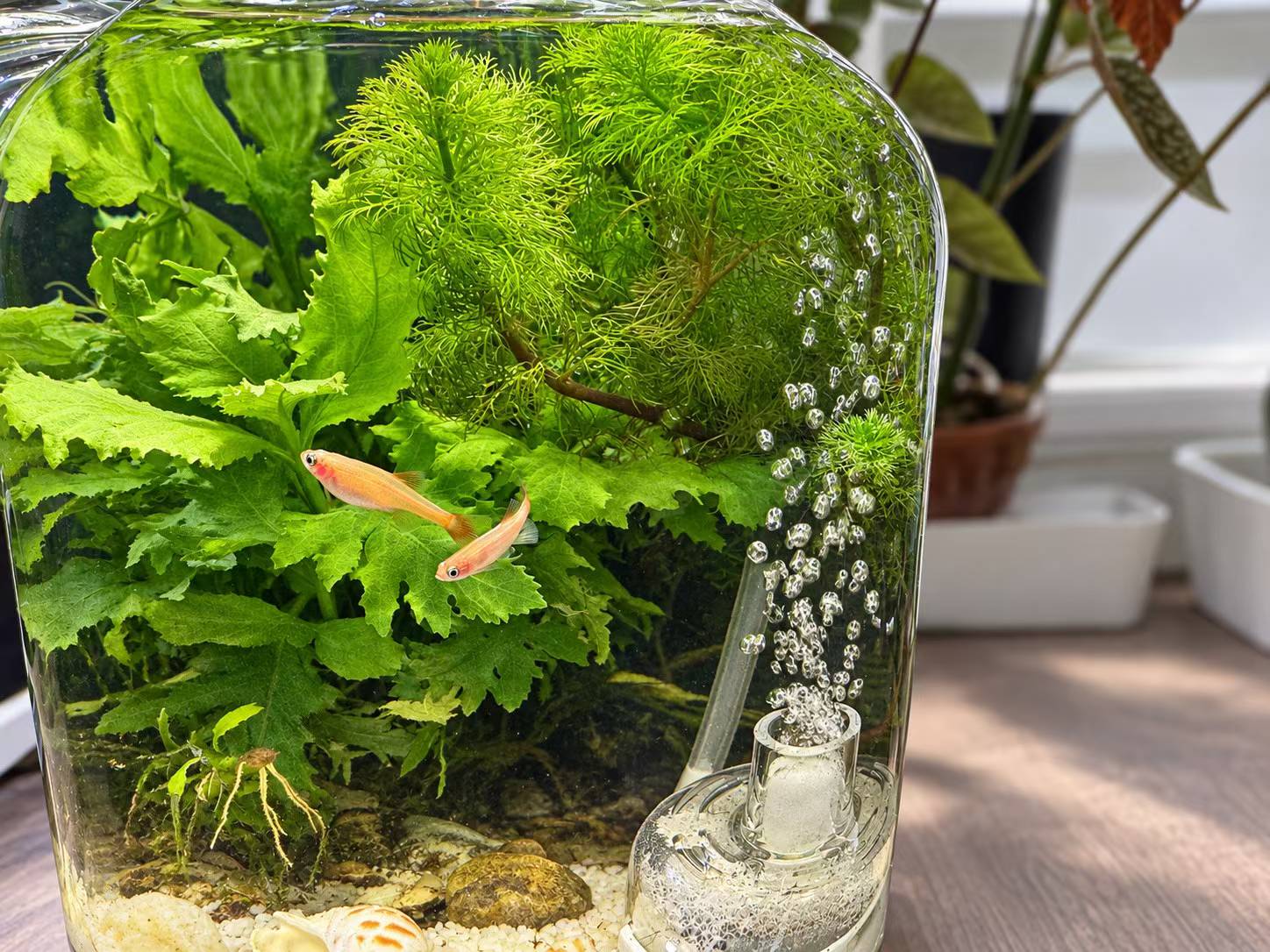
Next to my computer, the plants light up, fish slip between their leaves and a string of bubbles rises beside them. When I tire of writing I can turn my head and watch. The faint sound of the water has become part of the room.
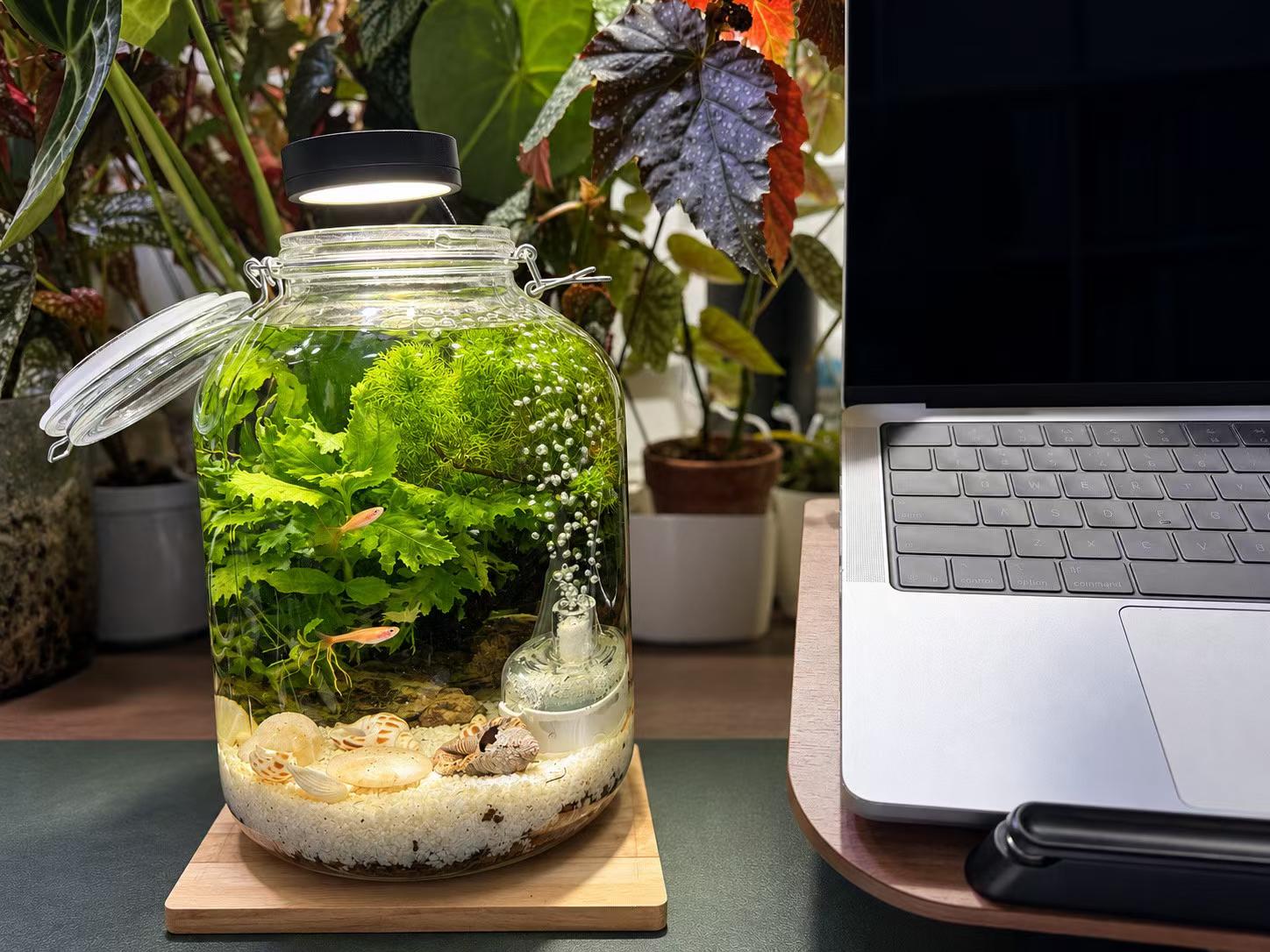
The fish only arrived today. The scene looks complete, but it is much too soon to know how it will fare.
Building from the bottom
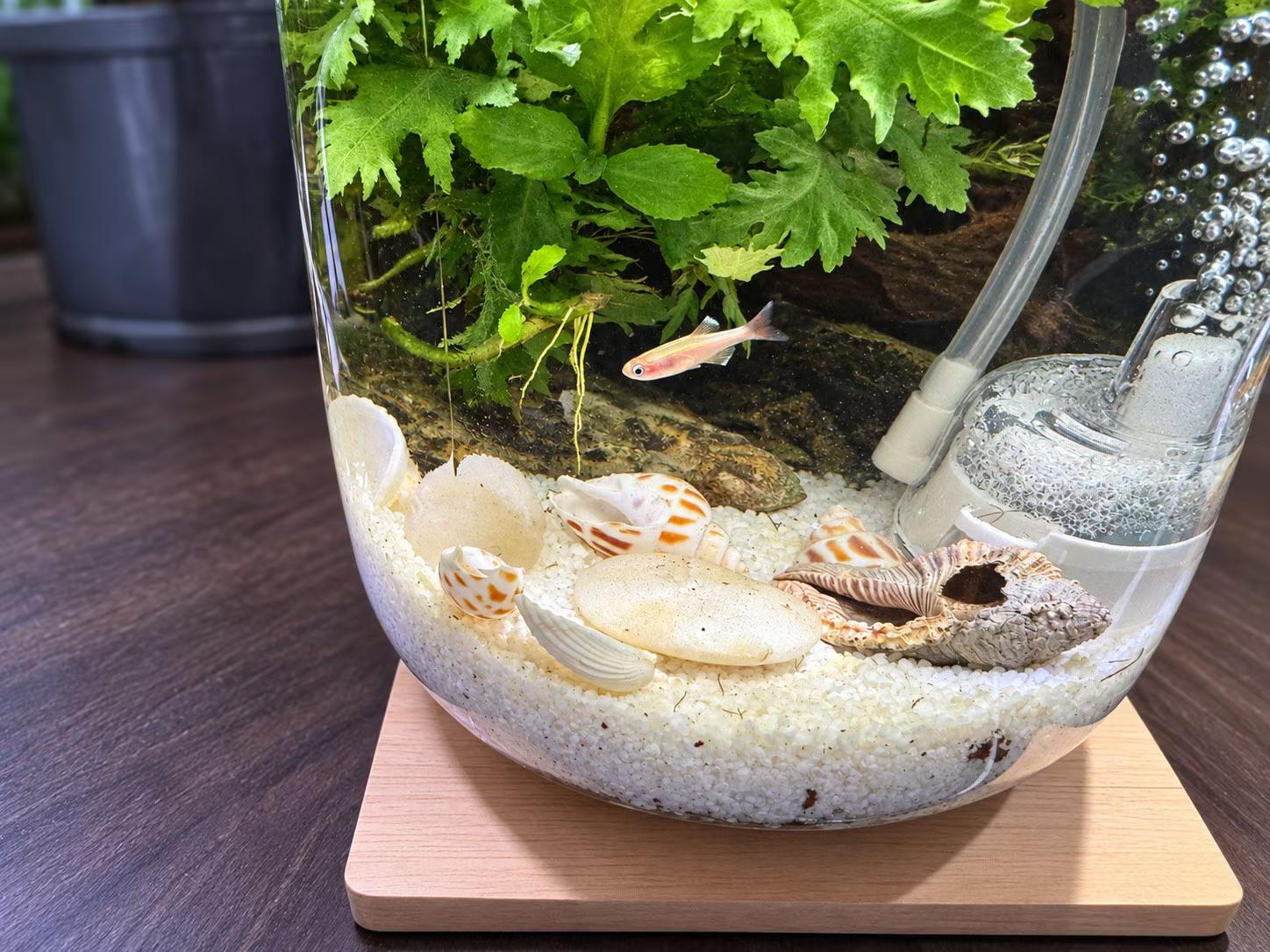
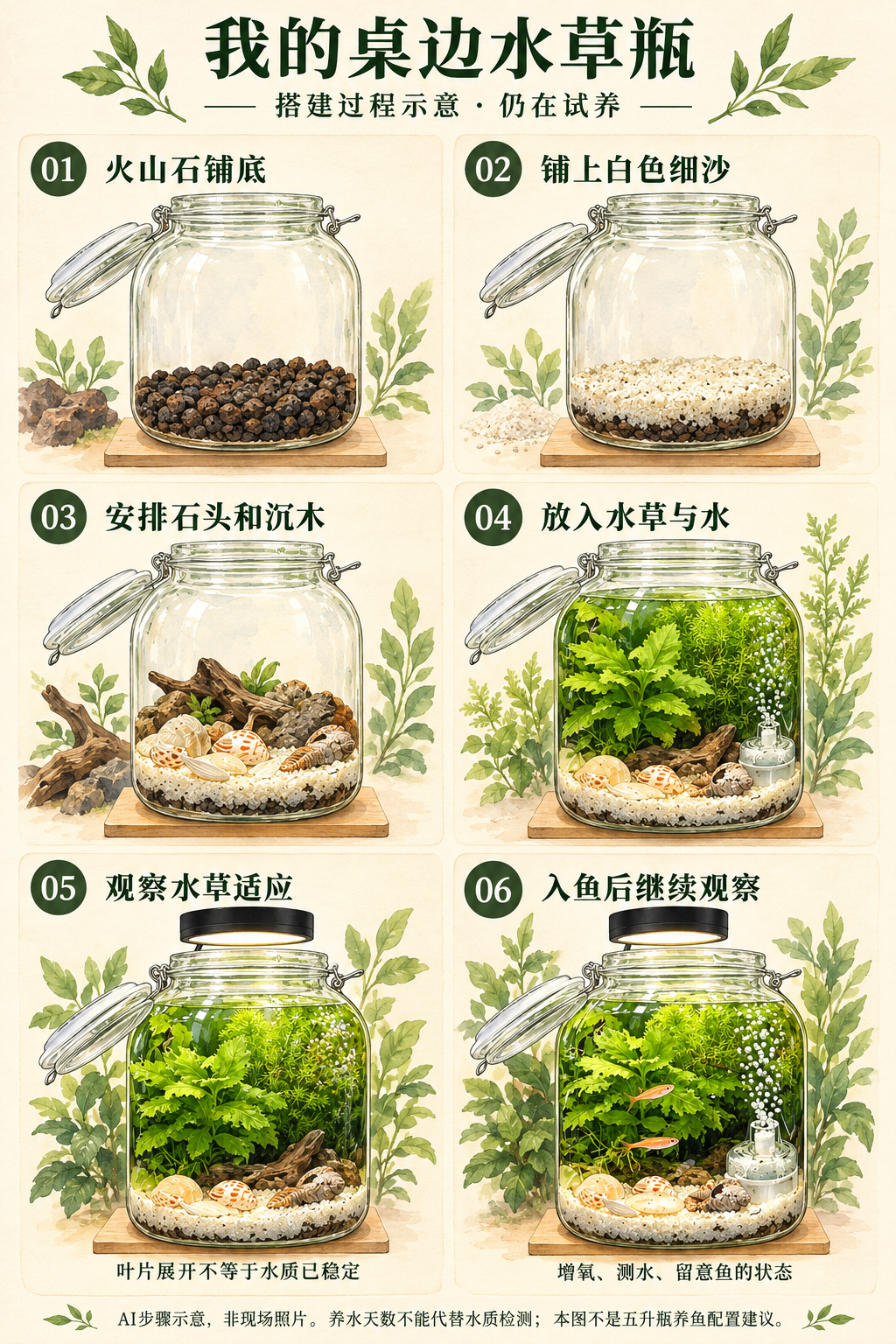
I started with lava rock, thinking its surface might give nitrifying bacteria somewhere to live. Fine white sand went over it. Rocks bought online held the layout in place; driftwood and plants came next. I left some white foreground for shells I had kept. Dark rock and green leaves behind them give the little scene depth.
There is water wisteria and a fine-leaved plant the seller called “pagoda grass”. The seller sent rather more than this jar needs. It looks deep, but it is crowded.
I didn’t photograph every stage, so I asked AI to illustrate the sequence from the materials I used. The shapes and proportions are approximate. This is a record of an experiment, not a tested stocking plan for a five-litre jar.
The plants had a week to themselves
For about seven or eight days before adding fish I changed roughly a third of the water each day, turned on the light and watched. The water wisteria gradually opened out. The pagoda grass had looked so dry on arrival I thought I’d lost it. I followed the seller’s directions, cleaned it and put it in. Within days it was green. I thought there might be new leaves, but didn’t check closely enough to tell.
The change surprised me. I don’t know quite what state the plant had been in or why it recovered. Some of the denser growth is yellow inside. It could be shade, or part of the adjustment. I want to thin it when I next change the water.
I used tap water left standing for a day or two. I haven’t measured temperature, ammonia or nitrite. The plants have visibly changed; I don’t yet have measurements for the water.
Why I kept the little sponge filter
It stands out on the right, but the opening is narrow and the volume small. I wanted a little more circulation and gas exchange. Seasonal temperature swings are another thing to watch. The light runs about eight or nine hours a day. I first thought of putting the filter on the same timer, but filtration and oxygen supply don’t follow the daylight schedule; the fish still need oxygen after dark.
Five litres is the approximate capacity before sand, stones and wood. Four or five fish is a high density here. I remember the names as white cloud minnows and their gold variety, but still need to check the order. One or two arrived in poor condition. Transport may have played a part; I don’t know the cause. A filter alone doesn’t settle whether the volume, equipment and number of fish fit together.
Experience has to come from doing it
I expect an aquarium group would have criticisms, and the limited water and high stocking density are real concerns. Seeing the grass go in, finding the yellow patches and deciding what needs changing feels different from watching someone else do it. That is what I’m recording. This is not a stable ecosystem yet or evidence for how many fish five litres can support.
I imagine the fish, plants and microorganisms gradually developing relationships. Whether regular water changes will be enough is still an open question. The moss jar alongside it is doing quite well with regular lighting. The moss shows some growth. No striking change in the cuttings yet, but no yellow leaves for now, either. Roots take time.
This jar has fish, moving water and bubbles, and asks something different of me. For now I like looking up from my writing to find a fish emerging from behind a leaf and disappearing again. I’ll return to the things that change once I’ve kept it a while.
What did this bring to mind?
Share a memory, a different view, or a thought you would like to continue. No account is needed. Comments appear after review; readers’ words remain in their original language.
Leave a comment
Conversation
Loading comments…