Originally recorded 2026-10-14; added to my personal website on November 11, 2026.
After making the little moss jar, I tackled an older terrarium. Moss tanks were what first drew me into growing plants: a small box of green that feels good to look at. I later tried planted aquariums, which is how I met Yushui, but the moss tanks held my attention. Gradually I accumulated jars and tanks all around the room.
I couldn’t remember exactly when I started this one. I found a photograph from December 2024, nearly two years before this entry. I’ve tidied the tank several times since. This time the small-leaved creeping fig was the main job: it had all but covered the original layout.
When one plant takes over
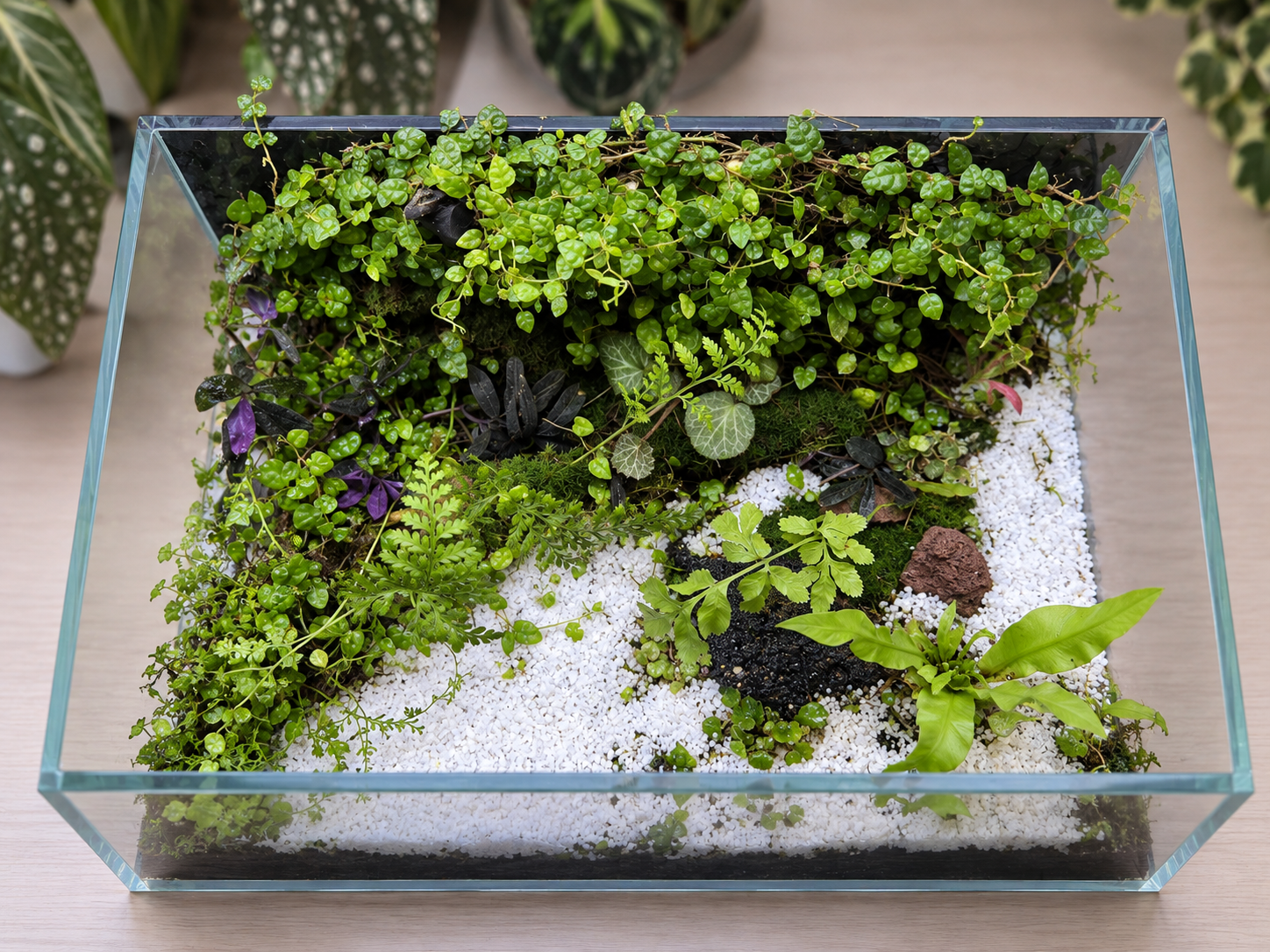
The creeping fig spread over the background and rocks, shading what grew underneath. Little of the original moss remained. Other plants couldn’t compete for space, though some ferns could reach upward. I suspect shade had something to do with the moss thinning out.
Keep the green wall and clear the front
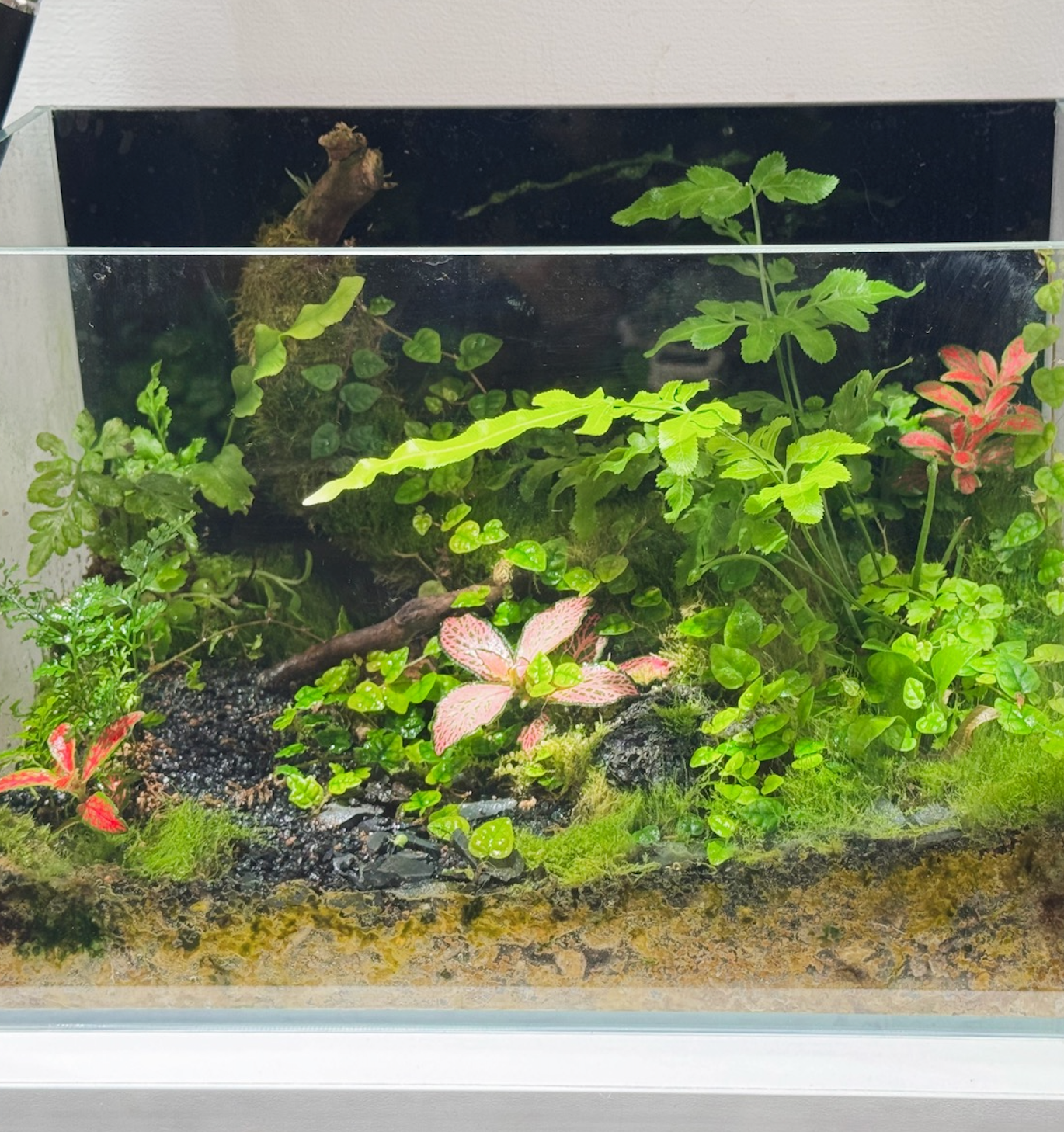
I kept a wall of creeping fig at the back and cleared the runners that had reached forward, exposing the stones and other planting. I kept ferns at the sides. Pale sand in front brings out the dark lava and leaves some open space for the eye.
Think about the size a plant will become
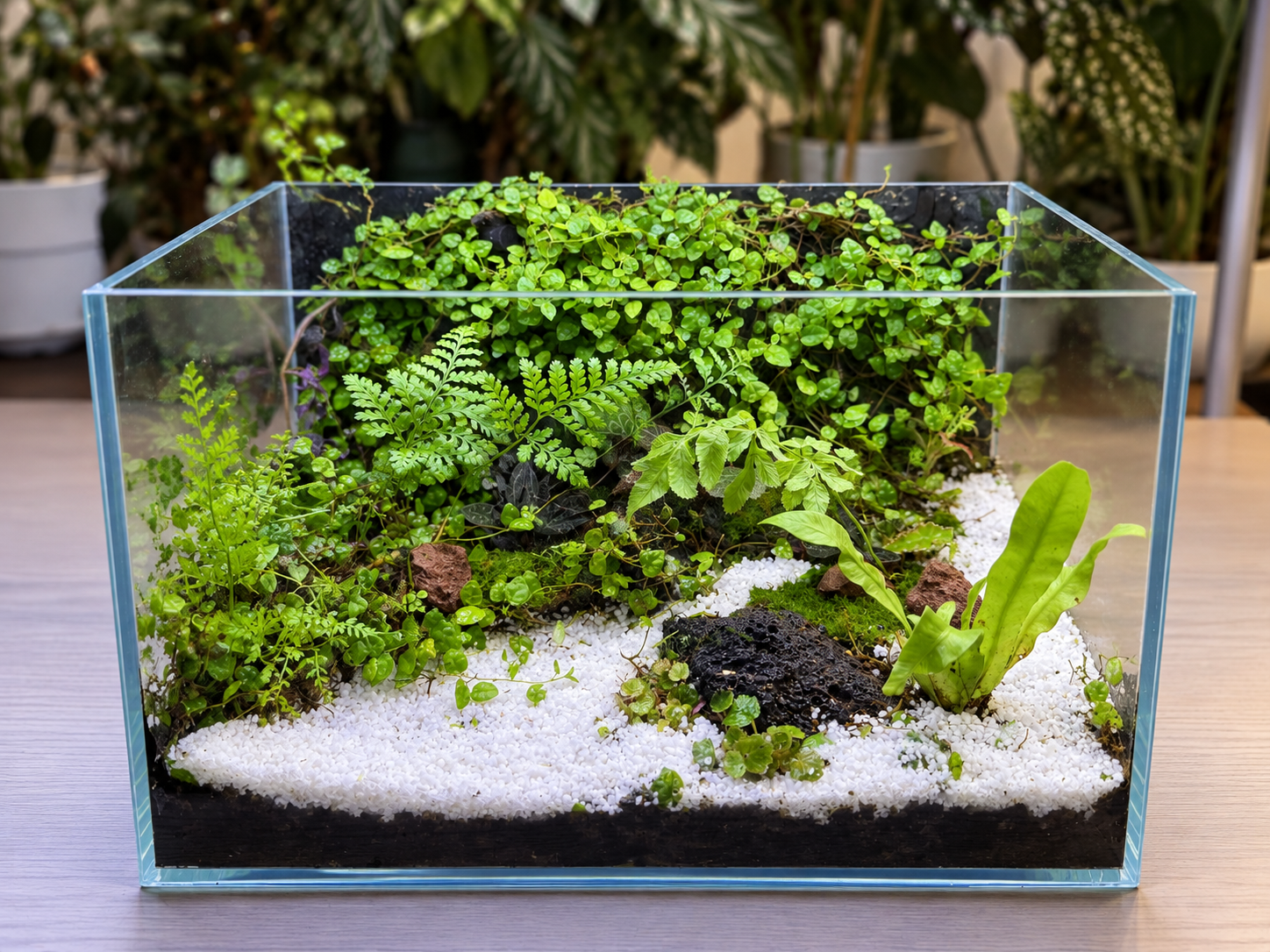
A plant that fits beautifully on day one may spread through the whole tank. When I know it grows fast I can ask whether I want the pruning and whether the space will hold it. I’ll need to watch where the fig goes and leave room for the ferns. The first day’s appearance is only part of the decision.
Keeping the same tank for years has shown me which plants adapt, which get shaded and what I repeatedly have to trim. Even in a small tank some places get direct light from the lamp and others sit beneath leaves. Light and moisture requirements matter when I choose each spot.
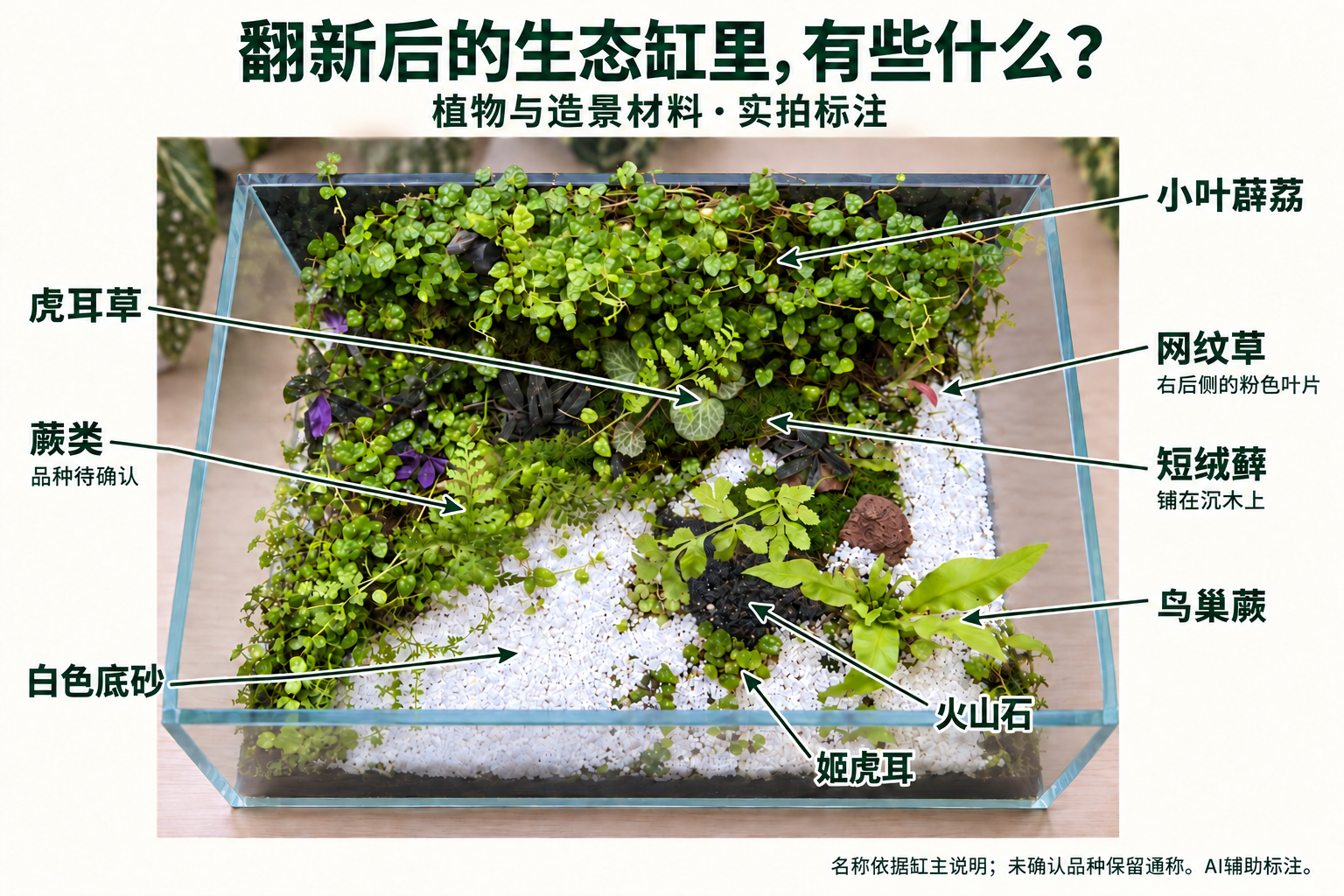
The labels identify creeping fig, saxifrage, dwarf saxifrage, bird’s-nest fern, other ferns not identified to species, nerve plant, short moss, lava rock and white substrate.
Holding back with watering
I plan to keep the tank mostly covered this time and add water in response to what I see. I want to pour slowly down the glass rather than spray every leaf. Where water goes and how much goes in are separate decisions. Even watering at the glass, I need to check the substrate and bottom level: I don’t want the planting layer soaking or the leaves staying wet without air movement.
Too much water may not show immediately; by the time a plant looks yellow, the roots may already be damaged. Wilting is easier to see, but I need to check whether the soil is actually dry before adding more. Both too much and too little water can leave a plant looking unwell.
I’m trying to keep my watering hand still and look at the leaves, substrate and changes in the tank before deciding whether to water or open the lid. I’ve been working with moss terrariums for a while; if yours has grown into a tangle and you don’t know where to begin, you can ask me. The rock outlines are visible, the ferns have space and the wall of fig remains. Now I get to see how it grows again.
What did this bring to mind?
Share a memory, a different view, or a thought you would like to continue. No account is needed. Comments appear after review; readers’ words remain in their original language.
Leave a comment
Conversation
Loading comments…