
When I share something I have made, I often hear the same response: “That’s amazing.”
Back when I painted, on days with lots of comments, I could hear it many times. Of course I was happy at first. After a while, I grew a little numb to it. Now that I make videos and websites, I hear it again.
To be honest, after all these years of creative work, I have some idea of what I can make. By the time a piece is ready to show, I can usually predict which parts will impress someone unfamiliar with the process. Hearing it said aloud again no longer comes as much of a surprise.
I have also become better at accepting that some people will like something and others will not. I have my own reasons for wanting to make it. I do not need to accommodate every response.
Someone has taken the time to look and offer a sincere compliment. That is kindness, and I appreciate it. Sometimes, though, I do not know what we can talk about after that.
And yet, when I was making the “Ask Runyu” videos a while ago, being recognized really did make me happy again.
When I first encountered the “Ask Runyu” AI question-and-answer mini program, I asked how to develop my watercolor services. Its suggestions helped, so I kept following changes to the mini program and watching Runyu’s livestreams.
Later, a thought occurred to me: the way it answers questions is a little like a strategist advising someone. What would happen if I put it into a historical costume story?
I recorded a voice note at the time, talking through my wish to bring this idea to life. The details might not all turn out as I imagined, but at least I wanted to convey what was in my head. I had never been able to make this sort of video before. Now I could try it with AI. That alone made me interested.
I went on to make several episodes, working features such as short-video script revision and reading companionship into the stories. The fourth episode’s cover said, “Real Talent: Don’t Hide It on Page Seven.” How a feature could become a story, and why a character would need it at that particular moment, interested me more than simply introducing the feature.
The videos received little attention in my own circle. Some people said they could not understand them. The response was different in Runyu’s group.
I found my recording from September 2. That day, after editing a video and posting it in the group, a staff member contacted me, and other people added me on WeChat. In the recording, I said my work was gradually being seen and that this felt like a good thing. Later, Runyu added me on WeChat, and the team wrote an article called “Tee Sang and His Six AI Videos,” introducing the work and the experiences behind it.
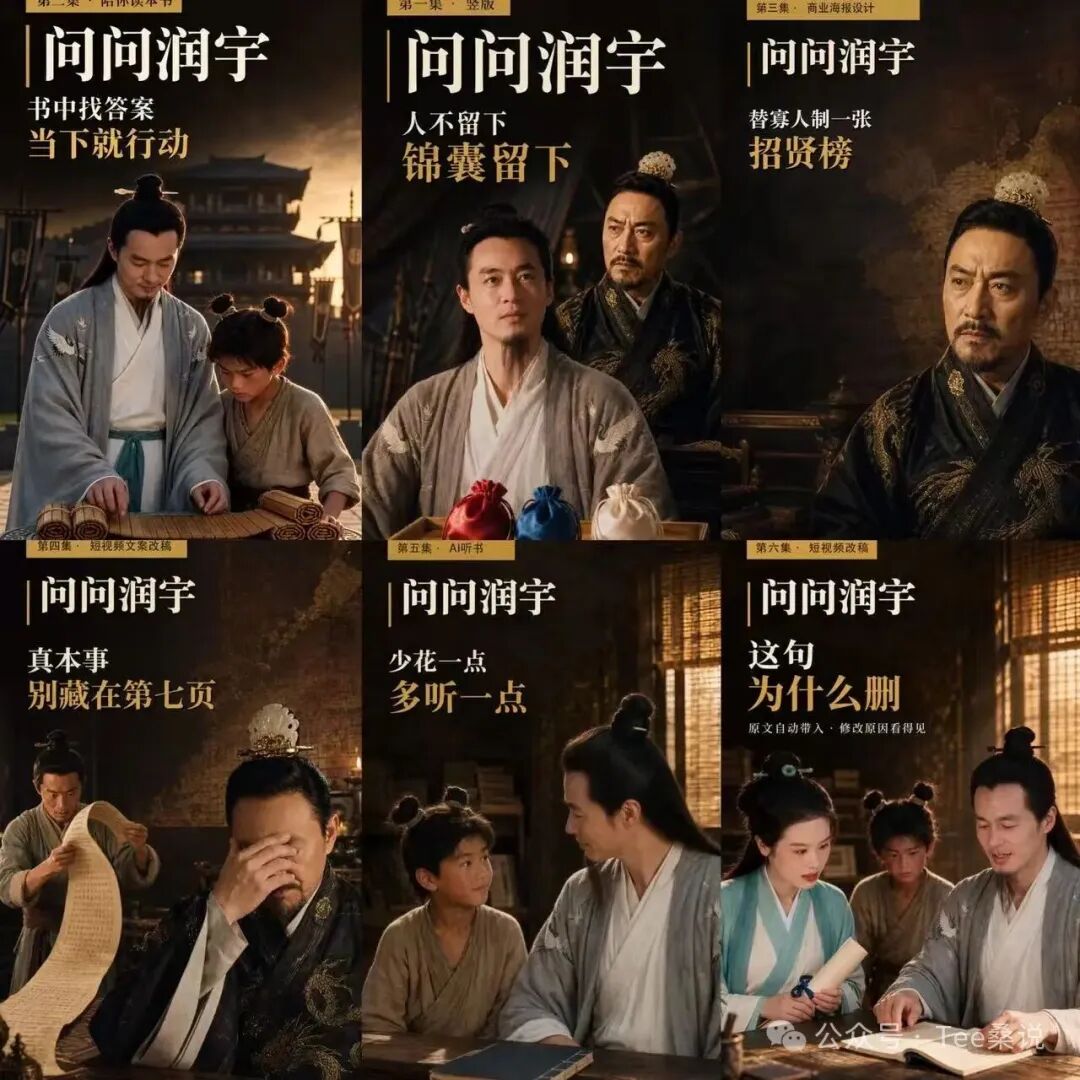
I was quite happy about that. Someone was willing to look closely at the characters, stories, and expression I had designed, and to introduce them to others.
It was recognition again. Why did it feel different this time?
I think part of the reason was that the work had reached a place where it was easier to understand. People familiar with the mini program and its livestreams shared some background. They may have picked up more readily on the meanings I had deliberately put into the videos. Elsewhere, people did not even know what the mini program was, which added another hurdle before they could enter the story.
Of course, a lack of response might simply mean the work had not been seen. I cannot attribute the difference entirely to “understanding” on the basis of feedback from just two places. But the experience did make me realize that being understood still makes me happy.
“A general compliment, and someone taking an interest in the thought I put into a piece, really do feel different to me.”
And once someone understands, I find myself hoping for a little more: might they want to have a go, too?
I already had this wish when I was painting. I wanted painting companions, people to paint with and go out looking for subjects with. Finding a work beautiful and being willing to pack your paints and head out together lead to different kinds of company.
We can paint differently. We do not have to be at the same level. We can find a place, each choose what we want to paint, look over halfway through to see what the other is working on, and talk a little when something is difficult. Even when there is nothing to say for a while, we have something we are doing together.
That is the kind of time I want.
Working with AI lately has helped me distinguish more clearly what I need from an exchange.
Sometimes I really would rather talk to AI first. An idea is still vague, not even clear to me, and it can already suggest a few directions. I can add details, remove what does not fit, then take one possibility and discuss it further. As the conversation goes on, something I can actually begin to do emerges.
For example, the first time I told “Ask Runyu” about my situation, I talked about having worked in watercolor and built a following, then later stopped posting and lost some of that connection. I wanted to offer urban sketching companionship and an online painting study room, but did not know how to introduce them or get started.
One idea it offered was that people learning to paint might want relaxation and company as well as techniques. That matched my own teaching experience, so we continued discussing how to organize the services, think about pricing, and choose a first step to try.
Those suggestions did not directly solve my real-world business problems. I still had to choose and test them myself. But that conversation made me feel I could keep thinking the matter through, instead of stopping at an idea I could not explain.
Recently, while studying the writing in Sanlian Lifeweek, I found an example close to this feeling. In the editor’s note in issue 28, Chen Xiao described rereading Homer’s epics. On her first reading, she had found the repeated battle scenes rather dull. Reading them again, whenever she encountered an unfamiliar character, she discussed the background with DeepSeek. She said this reading companionship helped her enter the work more deeply. She then discussed it with colleagues and developed her interest into a series on heroic epics.
It was only her personal reading experience, but it felt familiar. When there is a question you want to pursue, and you can keep asking about the parts you do not understand, your interest has a chance to deepen.
I particularly need that continuity when creating. Why does an image look wrong? Why does a story still seem to lack something? Sometimes I have no ready answer either. Being able to discuss it back and forth is itself very appealing.
But I still want to paint with people.
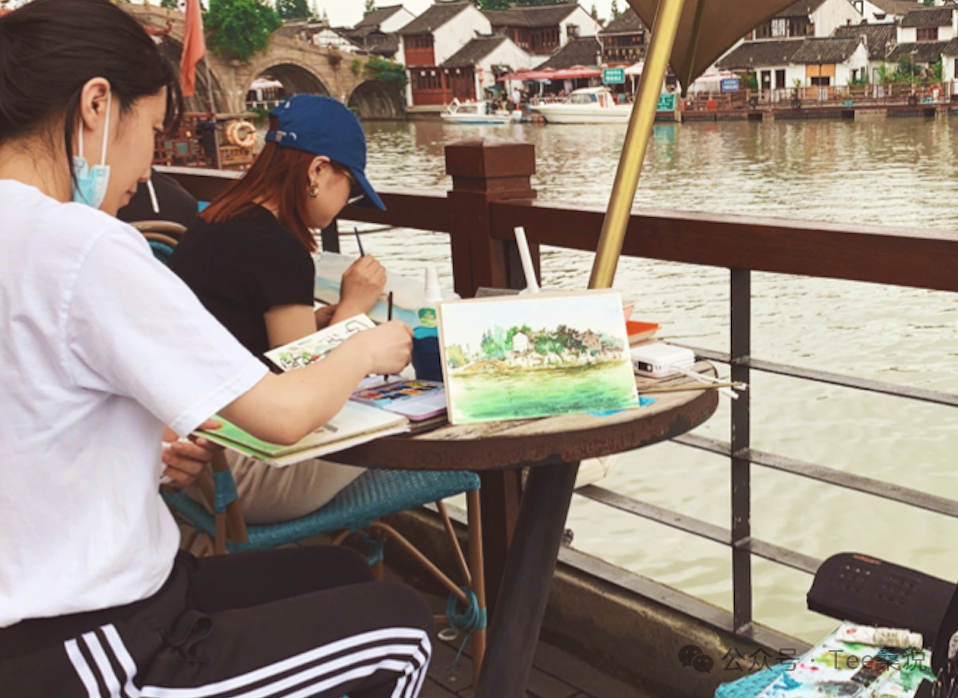
AI can discuss a picture with me. But when a painting companion and I arrive at a sketching location, I do not know in advance where the other person will look or what they will paint. I look forward to seeing their choices, and I am willing to let them see mine. Even if neither of us makes a good painting in the end, we will have a shared experience.
Likewise, if someone is making music, shooting videos, writing, or exploring a project I know nothing about, I would be happy to talk. I am interested in what they are trying, where they are stuck, and why they still want to continue. Hearing their enthusiasm may make me want to go home and make something again myself.
“I hope we are both still curious about something, and willing to try it ourselves.”
An article in issue 26 of Sanlian, “Ordinary Students’ Path into AI,” described Datawhale, an open-source AI learning community. It began as a small mutual-help group. Each week, people researched questions and looked for answers on their own, then came together to discuss them. Some participants’ study notes later became tutorials. Other learners tried them out, raised questions, and added material closer to practical work.
What caught my attention was one very specific step: learn a little, share that little bit, let someone else try it and bring back new questions. A piece of work keeps growing, and the conversation has something to continue with.
Those students’ situations, studying and looking for jobs, are different from mine. I am not planning to copy them and start a community. But I do long for that state in which everyone brings a little something, then takes a little something away to keep working on.
This does not require everyone to arrive with a finished result. If you are just starting and bring a question you sincerely want to understand, that is good too. When I enter a new field, there is plenty I do not understand myself.
What sometimes bores me is an exchange that stays fixed in the positions of me showing something and the other person evaluating it. I finish talking about one thing and find another to present, until it feels as if I am endlessly introducing myself. The other person may already have completed a friendly social exchange, while I am still thinking about all the things we never had a chance to explore.
But concluding from this that other people have no ideas would be too hasty.
Issue 27 included an essay called “A Midlife Class Reunion: We’ve Run Out of Things to Say.” At a reunion, the writer could not join in when everyone talked about raising children. When she talked about badminton and plants, the conversation also struggled to continue. Later, she suggested that those who remained play a game of cards. The atmosphere reminded her of their university dormitory again.
“They were still the same people. Having something to do together changed the way they spent time with each other.”
If conversation stays on things that do not interest me, I get bored. My creative process may feel the same way to others. We are not obliged to take an interest in everything. Instead of explaining the mismatch in terms of who is more interesting, perhaps we can acknowledge that, at that moment, we had not found something we could both enter into.
I have set up groups before. There were interested people, but getting a real conversation going was not easy. Now I do not particularly want to make “finding people on the same wavelength” a task first, then go around meeting people and introducing myself one by one.
I would rather begin by writing in public. I can slowly describe what I am working on, the questions I have not resolved, and why I kept this version. The process beyond the finished work can also become part of how people get to know me.
I just do not want to wait beside every new article, expecting it to bring a deep conversation. Writing it down and clarifying my own meaning is useful already. If the right person picks up the thread, we can continue.
The Runyu videos showed me that moving to a different place can sometimes make my work understood. My wish to paint together reminds me that, after being understood, I also want more shared experiences. These needs are all real. They do not have to be met by the same person all at once.
What I look forward to now, perhaps, is a day when, as we talk, the other person comes up with something they want to try as well. We each go away and work on it, then come back some time later to see what we have made. We should have more to talk about then.
If it is painting, it can be simpler still.
“When shall we go out and paint together?”
Reading:
Chen Xiao, “Editor’s Note: Why Do We Still Read Epics Today?”, Sanlian Lifeweek, 2026, issue 28.
“Ordinary Students’ Path into AI,” Sanlian Lifeweek, 2026, issue 26.
Jiexi, “A Midlife Class Reunion: We’ve Run Out of Things to Say,” Sanlian Lifeweek, 2026, issue 27.
The magazine material is paraphrased from reading, not from interviews I conducted. Personal experiences were organized from my own spoken accounts and existing records. AI assisted with organizing the text.
What did this bring to mind?
Share a memory, a different view, or a thought you would like to continue. No account is needed. Comments appear after review; readers’ words remain in their original language.
Conversation
Loading comments…