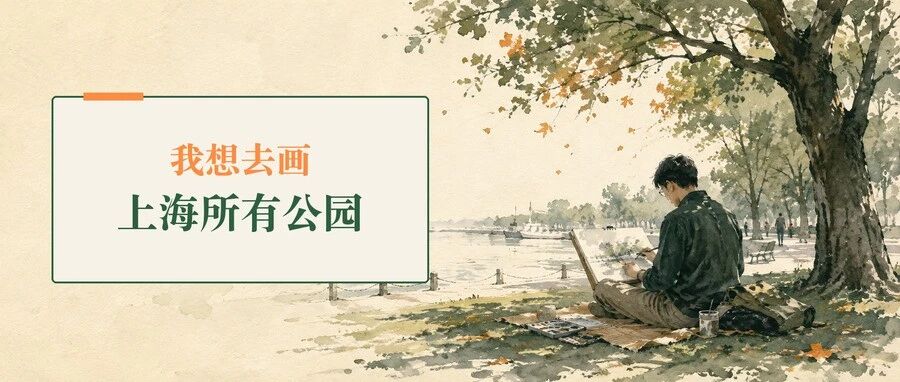
Last year, I gave myself a rather ambitious idea: visit every park in Shanghai, and wherever I could paint, sit down and make a painting.
Calling it a challenge doesn't seem quite right. For me, it's more like a sketching plan with a sense of ritual. Each time, I choose a park I haven't painted before, which gives going out both freshness and a clear purpose. When I return, I can tick a box or mark a point. I could even put a map with locations lighting up on my website, teesoho.com.
For an IN type like me, who isn't generally eager to plunge into a crowd, that motivation is useful. It doesn't make me hurry around just to finish a checklist. It makes me genuinely willing to enter a park and see what I might discover there that day.
Some painting friends arrive somewhere and say there doesn't seem to be anything worth painting. I never get angry when I hear that. I just don't quite agree.
I've always felt that no park is inherently unworthy of being painted. I could even take that a step further:
“Nothing loses its right to enter a painting simply because it is too ordinary.”
01 A small benefit of freelancing
I've been freelancing in Shanghai for many years. It certainly involves uncertainty and having to arrange everything myself. It also gives me one very practical small benefit: I can visit parks on weekdays.
There are fewer tourists and office workers then. In my own observation, older men out walking or exercising tend to be more numerous around seven or eight in the morning and after dinner. The daytime is quieter. When it's hot, everyone knows to stay out of the sun too.
I only need to find some shade and sit down. With quiet around me, the smell of plants in the air, and green everywhere I look, I slowly relax.
Compared with streets full of traffic, I really do prefer sketching in parks. Trees, grass, and water are all within my comfort zone, and I feel more relaxed painting them. Sometimes a little pavilion, railing, or distant building appears too, giving the picture both the looseness of nature and the firmness of a structure.
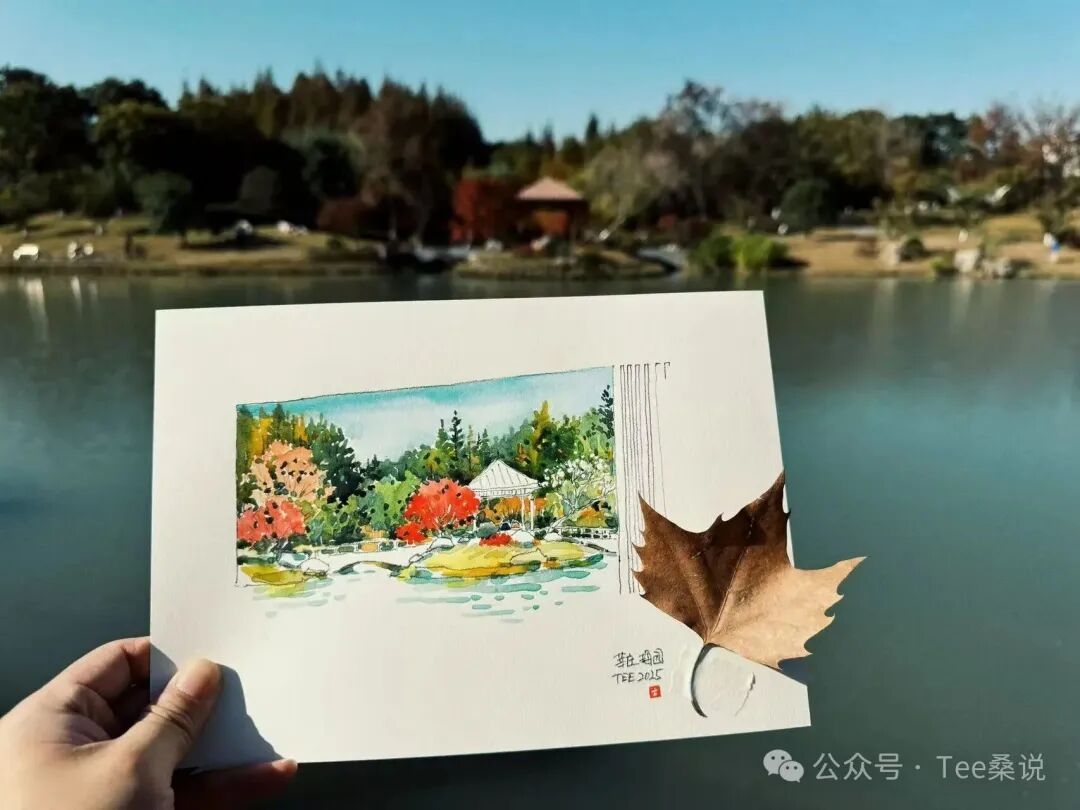
I'm particularly fond of Shanghai Wusong Paotaiwan National Wetland Park. It sits by the river, where you can watch boats passing. When there's shade to be found, sitting and painting is comfortable. Of course, strong wind or too many mosquitoes can reduce that comfort immediately.
Shanghai has been hot this summer, and I've barely gone out over the last two months. Heat, sweat, and mosquitoes are each bearable on their own. Put them together, and it's easy to decide to stay home. Now that September is here, I want to start going out again.
Many parks are free to enter. For painters, they are creative spaces that offer very good value. Bring paper, paints, and a picnic mat, find a suitable place, and you can stay for an entire afternoon.
02 The scene outside is only a starting point
I have my own feelings and judgments about painting on location. It may look as though I'm painting the scene in front of me, but what is really being activated is the image library already in my mind, together with my mood and state at the time.
When I see a tree, I don't start from zero and copy every leaf as a camera would. I might first recall familiar tree shapes, or how I've previously handled canopies, branches, lit surfaces, and shadows. I may also naturally move into the colors and brushstrokes I'm most comfortable with.
The tree outside gives me a starting point that puts my accumulated experience to work. Why I happen to notice it today may also have something to do with my mood at that moment. So there will be a tree in the final picture. Whether it is a complete replica of this particular tree is another question.
I believe many fellow painters share this understanding: different painters standing in the same place may produce entirely different paintings. One sees the architecture first, another notices only the tree shadows, and someone else includes a tiny person in the distance. Viewers often recognize a painter's style because each time that painter faces the world, they draw on a familiar way of seeing and handling it.
That doesn't mean ignoring what's actually there. Precisely because you've gone there in person, the external scene has a chance to meet the experience already in your mind and be reorganized. If all I needed were an accurate view, I could find a photograph online to paint from, save an hour or two of travel, and avoid the sun, insects, and sudden changes in weather.
Yet I still want to go out and paint.
Once I've traveled somewhere and sat down, painting is more than handling an image. I hear the sounds around me, see people pass, and feel changes in wind, temperature, and light. What I finally paint may still be only a tree or a patch of water,
“but a little story has already happened between me and this place, at this moment.”
03 Ordinary does not mean empty
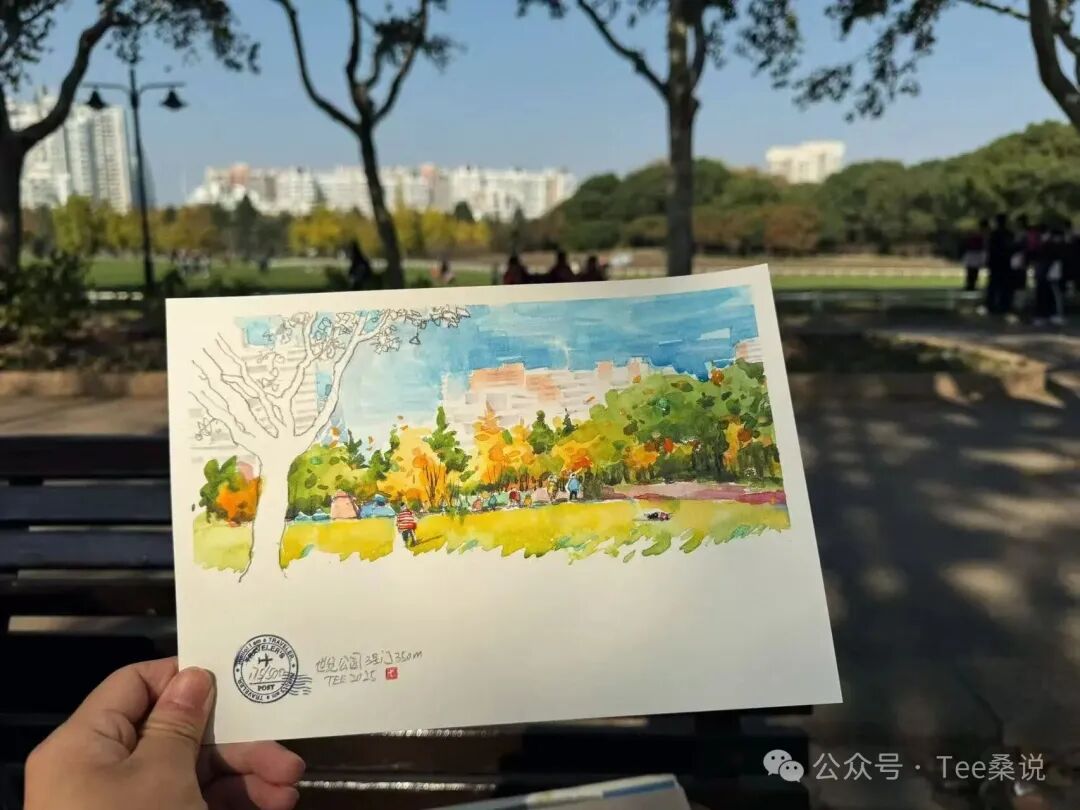
Some places are famous, and when you stand there it's easy to know what to photograph or paint. The landmark is right in front of you. Even the composition seems to have been rehearsed for you many times.
An ordinary park offers no such convenience. There may be only a few trees, a path, and a bench, with people walking, chatting, or sitting in the sun nearby. It doesn't announce that there is a standard picture you must complete.
Yet many of the painters I like, including the images in styles I enjoy and collect daily for my WeChat official account, paint exactly these everyday things. A cup on a table, a plant by a window, someone passing a street corner, or a tree without a name.
Because I've seen those things too, I can more easily enter the scene. I don't see only some unusual subject. I can also sense why the painter stopped at that moment and why they wanted to portray it this way.
Of course, that doesn't mean every little thing must be worth painting, or that the less conspicuous a thing is, the more sophisticated it becomes. It still depends on the individual. If an ordinary object engages your experience, emotions, and desire to express something in that moment, it can become your painting subject. It's also perfectly normal if someone else feels nothing about it.
“A subject doesn't automatically make a painting work. What enters the picture is how the painter sees it.”
04 You can look at one park for many years
I don't want to paint Shanghai's parks so I can rank them afterward. Each park has its own things to observe. Even without striking architecture, there are layers of trees, people doing morning exercise, colors that appear only in a particular season, or a space changed by renovation.
Return to the same park after a while, and it isn't the same scene. The light has changed, the plants have changed, the people visiting have changed, and so has your own state. Last time, you may have seen only the woods; next time, you may suddenly notice someone beside a bench. A place that once seemed difficult to paint may feel manageable when you return after more practice.
As I keep visiting them one by one, what remains will be more than a collection of park sketches. It will slowly become a thread of observations about life. Which places have been renovated, who visits parks on weekdays, the colors Shanghai takes on in different seasons, and where my eyes have preferred to linger over the years: all of these can be recorded.
This plan may take a long time. I don't intend to rush around because of the number, but the idea of “painting every park in Shanghai” still gives me a little sense of ritual. It is like a thread slowly connecting each outing, each painting, and the details I meet along the way.
Once September cools down a little, I'll take the paints and picnic mat out first. Walk into the next park, find somewhere to sit, look for a while, and then decide what I want to paint today.
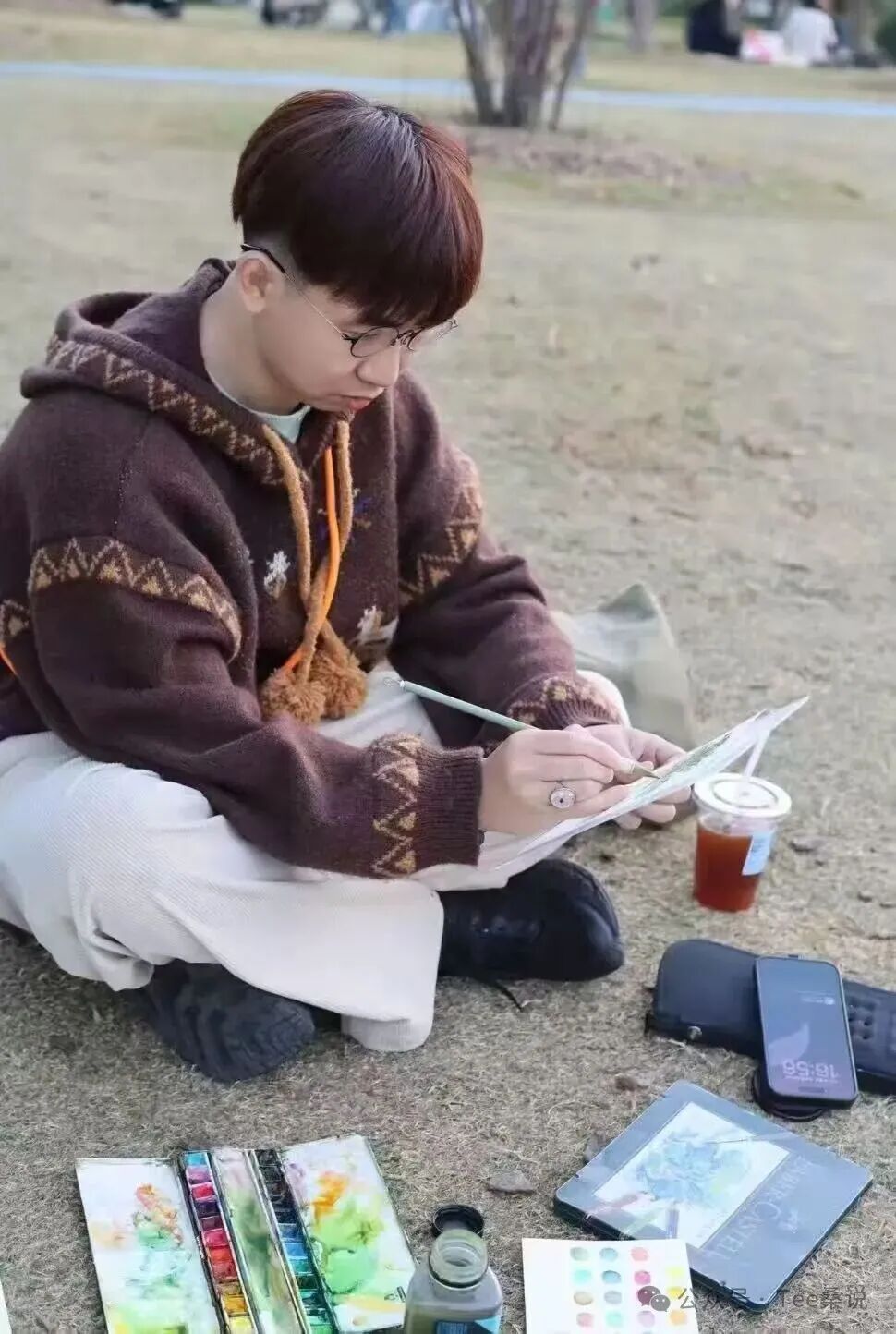
“A park doesn't have to prove its worth first. The person who brings the brushes only needs to see.”
The views, experiences, and final judgments in this article are the author's. AI assisted with organizing the text and generating illustrations.
Explore the Shanghai Sketching Map and paintings by location
What did this bring to mind?
Share a memory, a different view, or a thought you would like to continue. No account is needed. Comments appear after review; readers’ words remain in their original language.
Conversation
Loading comments…