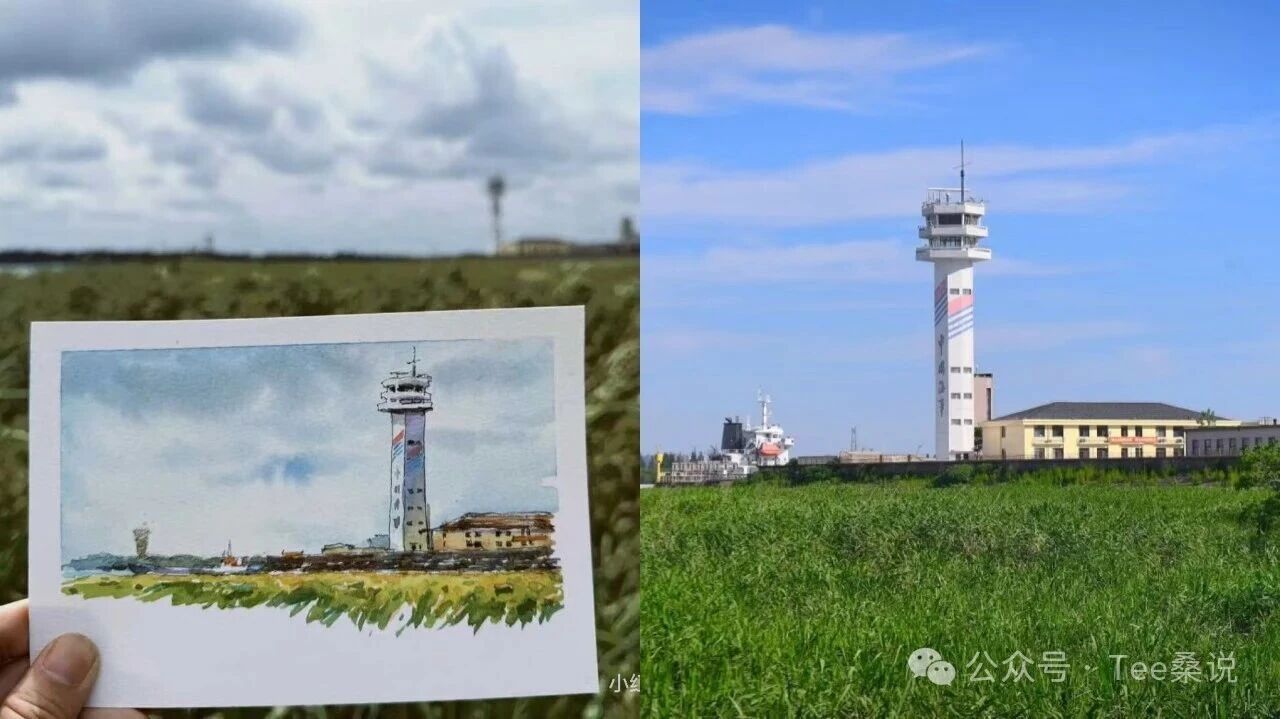
Before every outing to paint from life, I take out my supplies and put together a set.
I have a lot of materials, which means a lot of choices. Which paints to bring, what paper to use, how many brushes to put in the case: I can spend a while just considering the combinations. It is an enjoyable process, as though my mind has already gone outdoors before I have left home.
But after many outings, I have found that most of those supplies never get used once I am there.
Several parks near my home are good places to paint: Gongqing Forest Park, Daning Park, Zhabei Park, and a favorite of mine, Shanghai Wusong Paotaiwan National Wetland Park, about forty minutes away by electric scooter. I prefer parks to city streets. Grass, trees, and sky allow a looser approach, with a little architecture showing through among them. The picture has both soft and hard elements.
Paotaiwan Wetland Park is near Wusongkou, with its eastern side facing the area where the Yangtze and Huangpu rivers meet, and a long riverbank. Sitting in the shade, I can watch distant boats pass and hear water against the shore. A breeze feels pleasant; too much wind is another matter. There are also plenty of mosquitoes and other insects near the wetland. These are things you discover once you arrive.
Return to the same place a few days later, and the light, wind, and colors of the trees have already changed. Whether there is a suitable place to sit, how many people are nearby, and how accurately I am seeing shapes that day also affect what I eventually paint. Sometimes I intend to paint a building, but after sitting down, I am not quite in the right state. Every shape looks uncertain. Then I make the building smaller, letting it occupy only part of the image and leaving more room for trees, grass, and sky.
I do not see that as giving in. Painting from life always involves choices. A building has a definite structure, and if its proportions or perspective are off, it can easily take over your attention. Natural forms are looser; color and water can follow the feeling of the moment. I like putting both together, with architecture giving the image a little support and natural scenery bringing out the atmosphere. How much of each depends on how my eyes and hands are working that day.
When I sit painting alone, retired men and women often come over to watch. They ask whether I studied art, or whether I am a student. Sometimes even earphones and sunglasses do not stop them wanting a chat. They usually mean no harm; they just do not always pick up on the cues. A few words now and then are fine, and an ordinary painting outing gains a small story.
Weather, passersby, light, and boats can pull my attention away at any moment. Once I finish, I relax and hurry to pack up, which is when my hands can get disorganized. I have left watercolor brushes outdoors, and earphones too. The more things I bring and spread out, the harder it is to keep track of them. Setting out, everything seems potentially useful. Back home, I discover that I used only a few things, while the one that is missing is soon noticed.
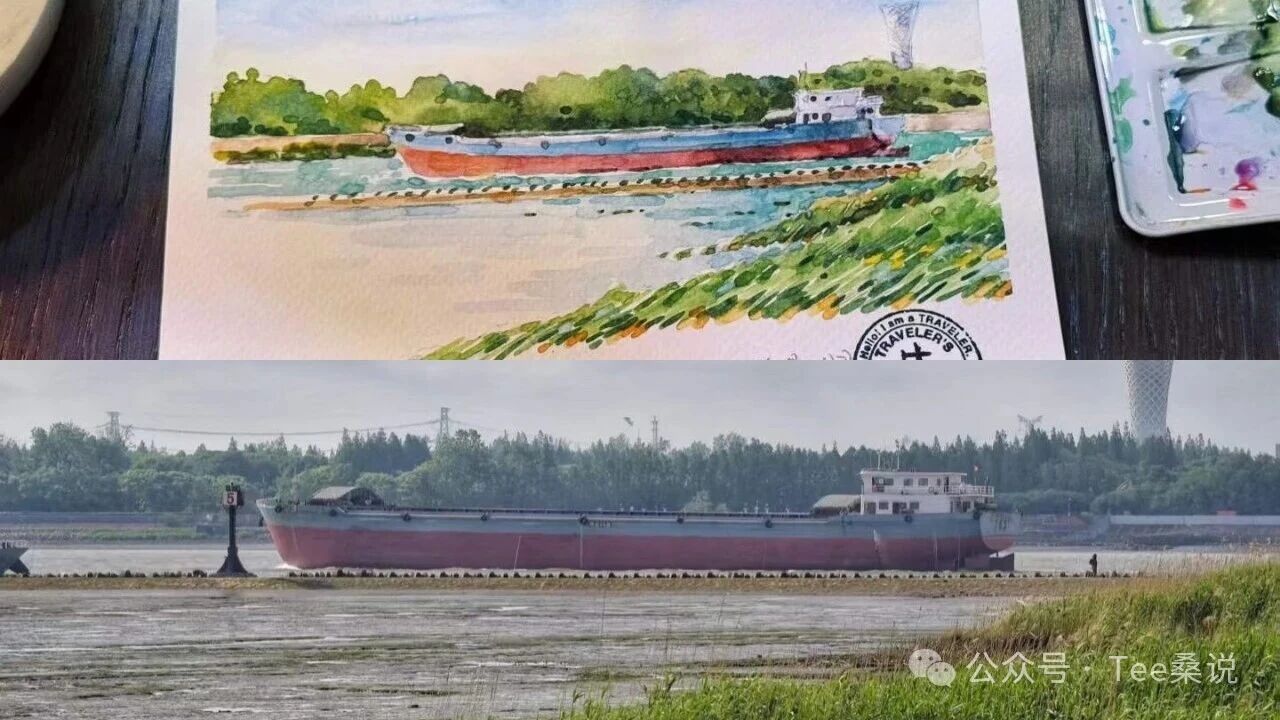
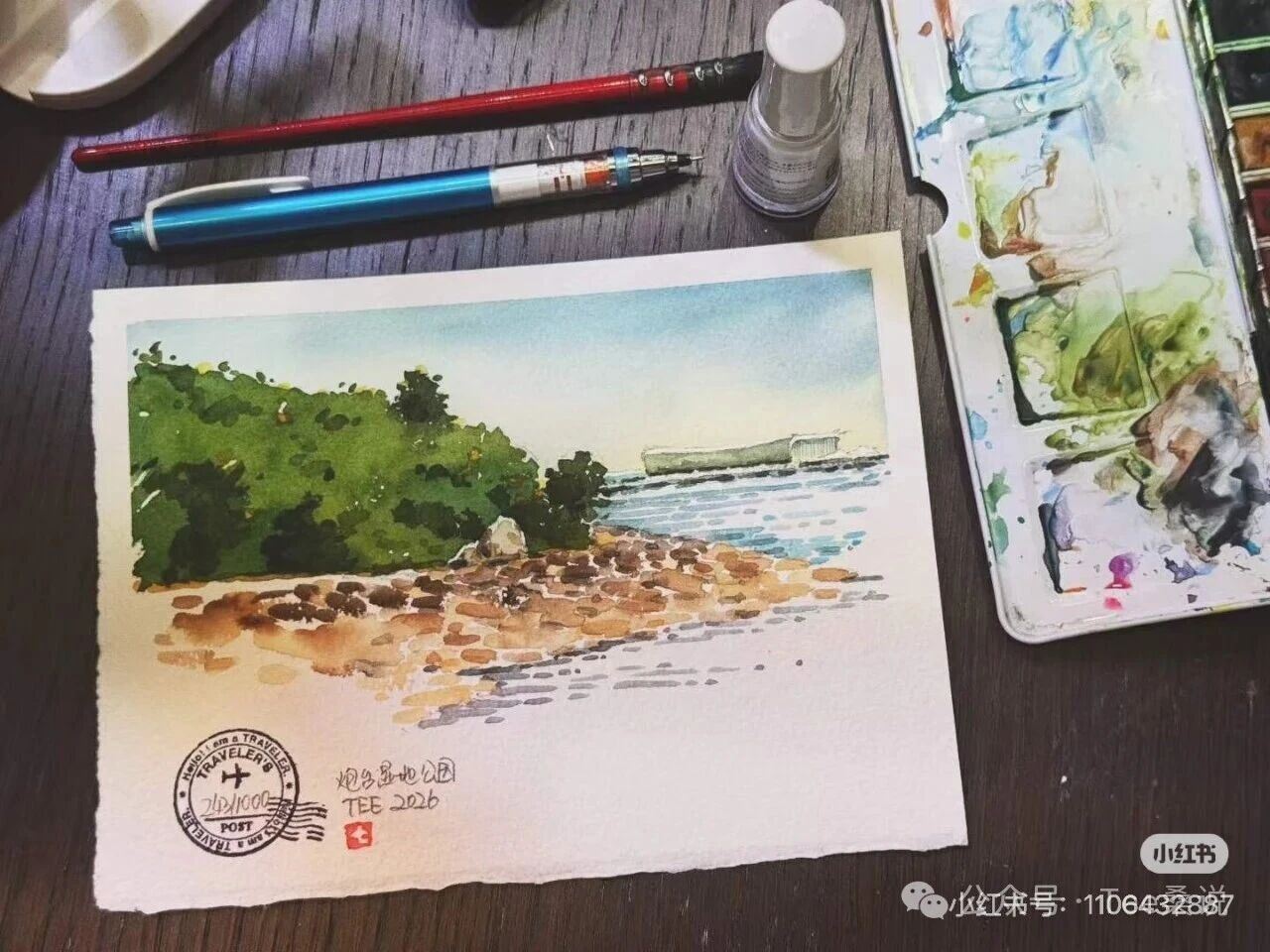
At the bare minimum, equipment for watercolor outdoors is simple: paper, paints, a brush, and a pencil for the initial drawing are enough to begin. Pan watercolors are easier to carry. For a drawing with light washes, I often sketch the forms and lines in pencil, then add color with one medium-sized watercolor brush. It can cover fairly large areas and handle small details, and is often enough for a whole painting. Bring water and an absorbent cloth; add the rest according to your habits.
Art supplies make it possible to put a mark on paper. What to paint on location, and how far to take it, depend on observation and decisions in the moment.
Many people going out to paint for the first time worry about missing equipment or being unable to paint once they arrive. Both are normal. I have also encountered too many people, nowhere to sit, or sun that was too strong, and ended up taking a few photographs and going home. One outing without a painting does not mean painting outdoors is not for you. Go a few more times, and you gradually learn what places suit you, which distractions you can let pass, when to change your angle, and when simply to move somewhere else.
If you always find it difficult to settle down alone, try going with a friend who paints. In many cities, there are people to paint with; you just need to make the effort to find them. Or begin indoors. Find a café with a window, order a coffee, and paint what you see outside. The setting is more stable, while still giving you practice in making choices from a real scene.
That is the biggest difference between drawing from life and painting from photographs at home. The photograph has already cut out an image for you. The location has not. You encounter wind, insects, and passersby, but also a boat passing at just the right moment, a sudden change in light, or a corner you had never intended to paint.
Each outing is like a very small journey through the city. You can plan a route beforehand, but nobody can say exactly what will happen once you are there.
People now often call walking around and looking at a city a "Citywalk." Painting from life has a little of that meaning for me too. I simply bring paper and paints when I go out.
Ride to the place, find some shade, and sit down. Look at today's scenery first, then decide what this painting will be.
The views, experiences, and final judgments in this article are the author's. AI assisted with organizing the text and generating illustrations.
What did this bring to mind?
Share a memory, a different view, or a thought you would like to continue. No account is needed. Comments appear after review; readers’ words remain in their original language.
Conversation
Loading comments…